Titans
Season 2 Analysis
Season Overview
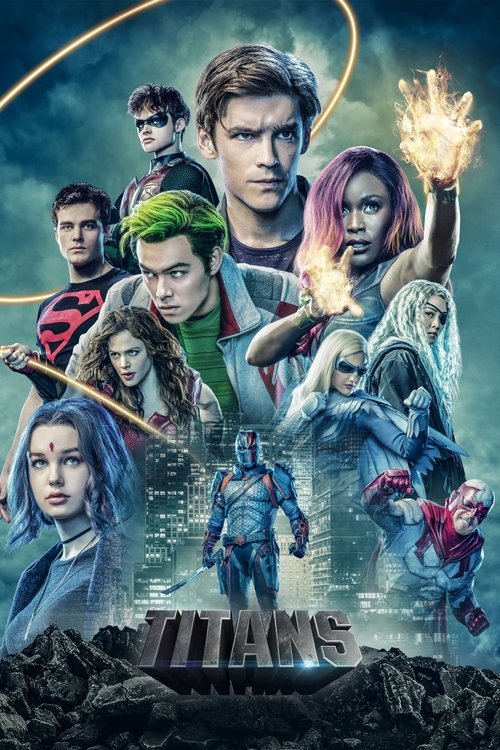
In season two, following the aftermath of their encounter with Trigon, Dick Grayson reforms the Titans. Under his supervision in their new home at Titans Tower, Rachel, Gar and Jason Todd train together to hone their hero abilities and work together as a team. They are joined by Hank Hall and Dawn Granger aka Hawk and Dove and Donna Troy aka Wonder Girl. Although these original Titans attempt to transition into a regular life, when old enemies resurface everyone must come together to take care of unfinished business.
Season Review
Categorical Breakdown
The main cast is racially diverse, notably with Starfire and Beast Boy. A minor subplot involves Dick Grayson assisting 'illegal immigrants' to escape deportation, which inserts a commentary on state and border policy into the narrative. Villainy is distributed across races and genders, including the effective female villain Mercy Graves, who is a woman of color and the head of the Cadmus project. The central struggle remains Dick Grayson's personal journey toward a new identity rather than a vilification of whiteness as a collective class.
The season is heavy on critiquing the legacy of the previous generation, specifically the traumatic and secretive nature of the original Titans and the destructive mentor relationship between Batman/Bruce Wayne and Dick Grayson. This involves the self-criticism of the superhero 'ancestor' but is rooted in personal psychological trauma, not a broader attack on Western culture. One character's arc involves actively helping 'illegal immigrants' escape a governmental facility to avoid deportation, which frames a governmental authority as hostile and corrupt.
Female characters like Donna Troy (Wonder Girl), Kory Anders (Starfire), and Dawn Granger (Dove) are consistently portrayed as immensely competent heroes, often more stable or effective than their male counterparts, Dick Grayson and Hank Hall, who struggle with guilt, secrecy, and addiction. Mercy Graves is a strong, powerful, and successful female antagonist, leading a major scientific corporation and orchestrating the Superboy plot. The female heroes are not simply sidekicks but lead their own independent crime-fighting efforts.
The new, central character Jericho, Deathstroke's son, is explicitly bisexual. Furthermore, the actor who portrays Jericho, Chella Man, is a trans person, which contributes to the show's overall push for representation in a major DC Comics property. While the character's sexuality is not the primary focus of the main conflict, its inclusion is a deliberate centering of alternative sexualities within the superhero team's orbit.
The supernatural elements are prominent, with the season premiere concluding the conflict with the demon Trigon, an 'Antichrist' figure's father, which utilizes traditional religious and mythic concepts. The villain Mercy Graves is noted for using the 'rhetoric of crusades' while carrying out an evil act (selling Superboy as a programmable soldier), subtly equating religious zealotry with systemic evil. However, there are no overt attacks on organized religion; the spiritual conflict is predominantly framed as a battle against demonic forces.