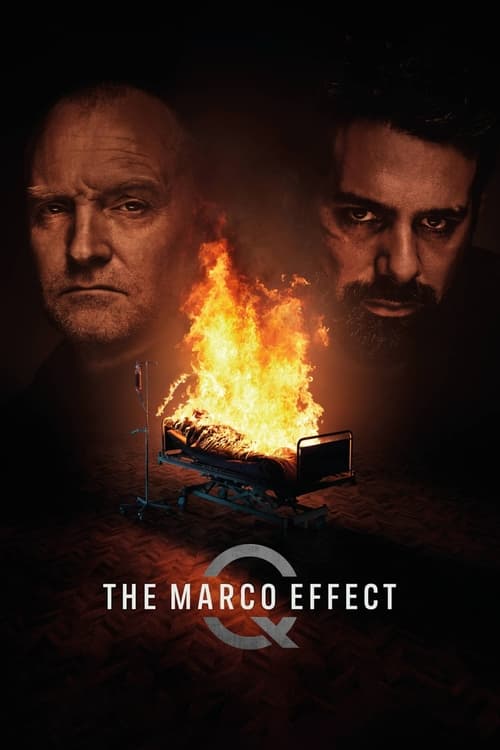
The Marco Effect
Plot
When a homeless Romani boy is arrested at the Danish border for possession of a missing public servant's passport, police inspector Carl Mørck and Department Q are tasked with finding the connection.
Get the Weekly Woke Watchlist
New and trending movies scored for woke bias, preachy messaging, and forced political themes — before you waste your evening.
No spam. One useful email per week.
Overall Series Review
Categorical Breakdown
The entire plot hinges on a marginalized Romani boy (Marco) and the exploitation of development aid intended for Africa, which directly foregrounds an intersectional power dynamic. The narrative frames the privileged Western elite—powerful, cynical, and almost exclusively white male ringleaders—as the villains responsible for victimizing the vulnerable.
The central crime is a 'multinational corruption' and 'swindle at a ministerial level' scandal within the Danish government and banking world, exploiting aid meant for non-Western nations. The story portrays the Western 'home culture's' institutions as fundamentally corrupt, greedy, and untrustworthy, which is a core tenet of civilizational self-hatred.
The female member of Department Q, Rose, is characterized as a 'brilliant and enigmatic' sidekick who is 'always two steps ahead of Carl,' who is himself often portrayed as jaded and despairing. This setup features a 'Girl Boss'-like dynamic where the female character consistently outperforms the less-than-perfect male lead, which elevates the score above a simple gender-balanced cast.
The plot contains no evidence of centering alternative sexualities, promoting gender ideology, or deconstructing the nuclear family as a central theme. The sexual deviance mentioned in the plot is strictly a criminal element, involving a missing public servant accused of pedophilia, not a comment on sexual identity politics.
The film’s critical focus is entirely on institutional, secular corruption within government and banking, not on religion. There are no indications of hostility toward traditional religion or portrayals of Christian characters as villains or bigots. The moral commentary is on societal greed and political corruption.
Get the Weekly Woke Watchlist
New and trending movies scored for woke bias, preachy messaging, and forced political themes — before you waste your evening.
No spam. One useful email per week.