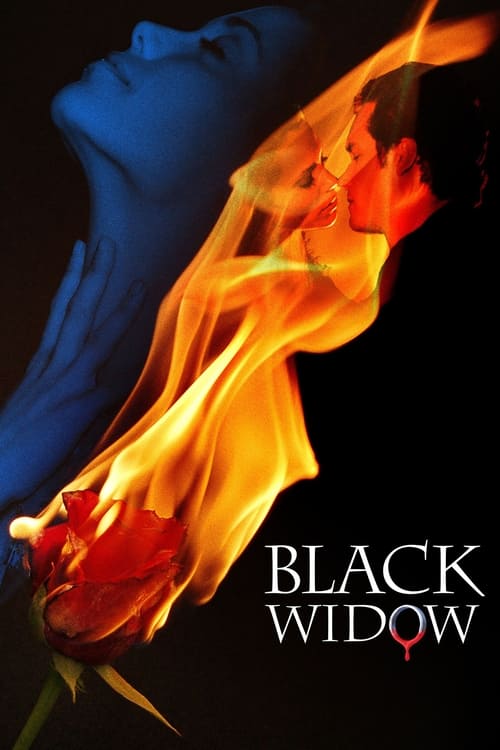
Black Widow
Plot
Mel, a photo journalist, gets suspicious when her best friend Danny start dating Olivia a wealthy but mysterious woman. She enlists the help of her assistant in investigating Olivia's past and present occupation putting herself in danger.
Get the Weekly Woke Watchlist
New and trending movies scored for woke bias, preachy messaging, and forced political themes — before you waste your evening.
No spam. One useful email per week.
Overall Series Review
Categorical Breakdown
Characters are judged based on their actions and moral quality; Mel is a determined investigator and Olivia is a sociopathic killer. The villainy is driven by individual financial greed and malice, not by racial or political critiques. The central conflict does not rely on intersectional hierarchy or identity-based power dynamics to explain the motivations or outcomes.
The plot is a secular crime drama about an individual criminal who commits murder and fraud. The protagonist works within the established institutions of American society (journalism, police) to seek justice. The film contains no evidence of hostility toward Western civilization, demonization of ancestors, or framing the home culture as fundamentally corrupt.
The main hero and villain are both powerful, driven women in a battle of wits. The heroine, Mel, is highly competent, a successful photojournalist who conducts a full-scale criminal investigation. Her friend and romantic interest, Danny, is portrayed as naive and easily duped by the villain, fulfilling a trope where the male character is shown as less perceptive and thus requiring female protection. The villain, Olivia, uses the institution of marriage and her own lethal competence as a financial tool, which is an anti-family act, though not accompanied by explicit anti-natalist lecturing.
The narrative centers on a traditional male-female relationship that the hero is trying to save from a female killer. The villain's weapon is the traditional structure of marriage and the nuclear family. There is no presence of alternative sexual ideology, centering of non-normative sexuality, or commentary on gender theory.
The story is a secular crime thriller that focuses entirely on individual human failings like greed, deception, and murder. Morality is clearly defined by objective truths: murder and theft are wrongs that must be exposed and punished. There is no element of hostility toward religion, and the plot does not embrace moral relativism.
Get the Weekly Woke Watchlist
New and trending movies scored for woke bias, preachy messaging, and forced political themes — before you waste your evening.
No spam. One useful email per week.