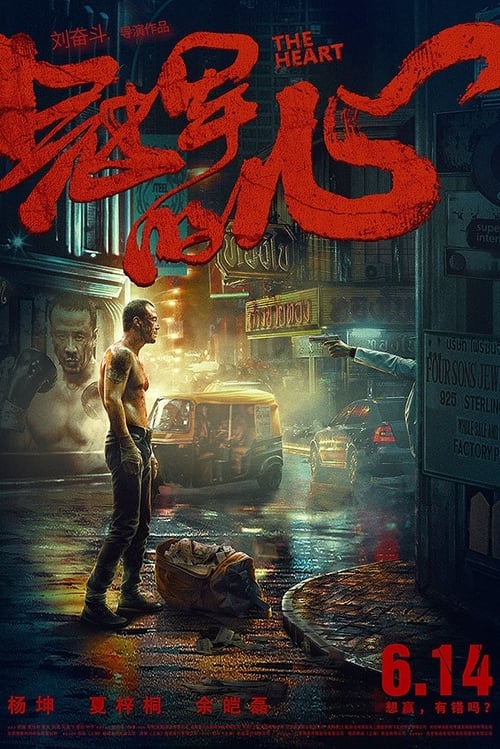
The Heart
Plot
In the last boxing match before his retirement, TAN Kai accidentally beats his teammate WANG Yao to death. WANG's heart is donated to a young girl, LI Chuan. Guilt-ridden, TAN Kai decides to meet LI Chuan and they slowly develop a friendship. Suddenly LI Chuan's body is starting to reject WANG's donated heart and a new surgery is very expensive. To pay for his sins and the surgery, TAN Kai must put his boxing gloves back on one more time.
Get the Weekly Woke Watchlist
New and trending movies scored for woke bias, preachy messaging, and forced political themes — before you waste your evening.
No spam. One useful email per week.
Overall Series Review
Categorical Breakdown
The movie is a Chinese production focused on individual and moral themes of guilt and redemption between two Chinese characters. The narrative relies entirely on character merit and the individual moral burden of the protagonist, Tan Kai, to 'pay for his sins' rather than an 'intersectional hierarchy' or political commentary on race.
As a Chinese film, the concept of 'Hostility toward Western civilization' is not relevant. The film does not engage in civilizational self-hatred; instead, it centers on traditional values of personal sacrifice, responsibility, and perseverance to overcome a deeply personal tragedy. The culture's institutions are not demonized.
The core dynamic is the male lead's sacrificial action (risking his life in the ring) to save the life of the young female lead, Li Chuan, who is a vulnerable person in need of protection. His motivation is noted to be a surrogate for his own daughter and paternal feelings. This plot setup reinforces the protective aspect of masculinity and avoids 'Girl Boss' tropes or the emasculation of the male protagonist.
The narrative is strictly focused on boxing, organ donation, guilt, and a platonic, paternal friendship. There is no presence of alternative sexualities, deconstruction of the nuclear family, or promotion of gender ideology. The focus remains on a normative, life-and-death struggle.
The central themes of 'guilt-ridden,' 'pay for his sins,' and 'redemption' demonstrate a strong reliance on a concept of objective moral truth and atonement for a moral failing. The film frames the protagonist's personal struggle as a quest for moral restitution, which aligns with 'Transcendent Morality' rather than 'moral relativism' or anti-religious sentiment.
Get the Weekly Woke Watchlist
New and trending movies scored for woke bias, preachy messaging, and forced political themes — before you waste your evening.
No spam. One useful email per week.