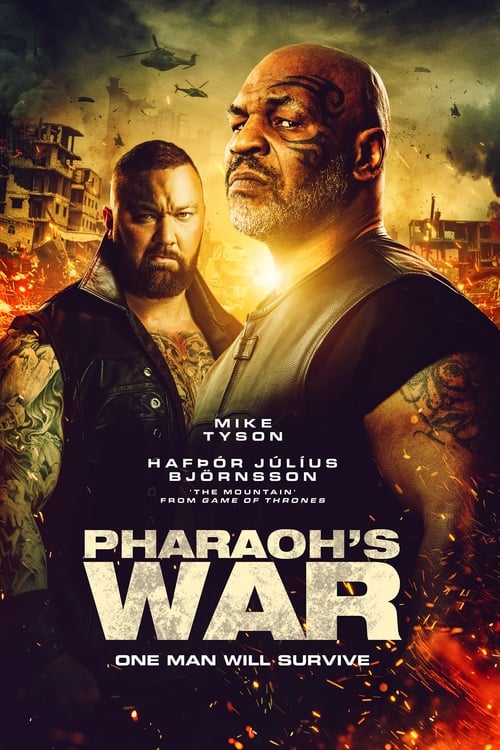
Pharaoh's War
Plot
Yehia, known as Pharaoh, reassembles a group of six of his old friends, each with a unique combating skill, to travel to Syria under the pretense of bounty hunting. Their real mission is to save his kidnapped son from the hands of Franco and his ISIS gangsters after they assaulted Syrian refugees, including Yehia's wife, and took away the children to a district that is currently under his control.
Get the Weekly Woke Watchlist
New and trending movies scored for woke bias, preachy messaging, and forced political themes — before you waste your evening.
No spam. One useful email per week.
Overall Series Review
Categorical Breakdown
The plot focuses on character merit, as the hero reassembles his friends based on their 'unique combating skill' to rescue his family and refugees. The conflict is moral—heroes (Egyptian/American) vs. villains (ISIS/mercenaries)—and is not structured around an intersectional hierarchy or the vilification of any broad racial group. The narrative is about competence and loyalty in the face of evil.
The film is an Egyptian production and is therefore not engaging in self-hatred toward Western civilization. The heroes fight to protect their family and their people (Egyptian and Syrian refugees) from a chaotic, external threat (ISIS and mercenaries). This demonstrates a narrative of national/civilizational gratitude and the protection of core institutions like family and life.
The driving motivation is the heroic, protective masculinity of the father figure, Yehia, who reassembles his male friends to save his son and wife. The narrative centers on the ultimate value of the nuclear family and motherhood, portraying them as precious entities that must be protected. Males are depicted as capable and protective, which runs directly counter to emasculation or anti-natalism tropes.
The core plot is a traditional rescue mission focused entirely on an existential threat to a traditional male-female pairing and their children (the nuclear family). The narrative maintains a normative structure, and there are no elements of alternative sexual ideology or gender theory present in the conflict or characterization.
The main villains are explicitly identified as 'ISIS gangsters,' which frames the conflict as a defense of a higher, objective moral law (saving children, protecting refugees) against radical extremism and chaos. While the film may not focus on a specific transcendent faith, the clear delineation between good and the evil of the terrorists suggests an adherence to objective morality. The film critiques a corrupted, violent ideology rather than traditional religion itself.
Get the Weekly Woke Watchlist
New and trending movies scored for woke bias, preachy messaging, and forced political themes — before you waste your evening.
No spam. One useful email per week.