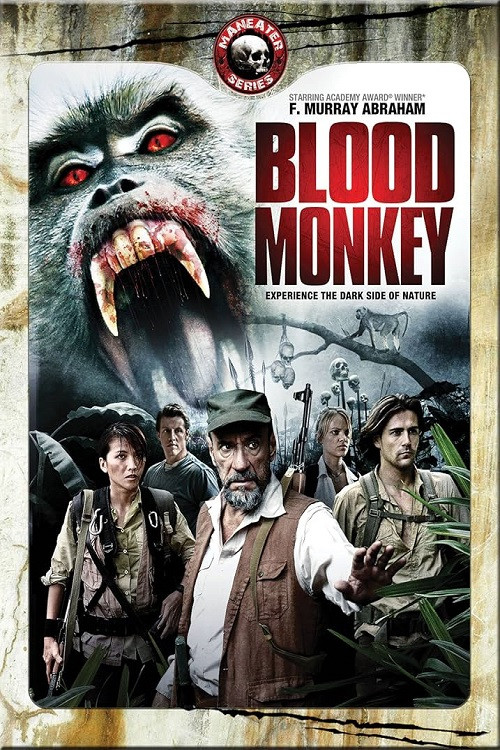
Blood Monkey
Plot
Six American grad students have arrived in Africa to study apes with a renowned professor. But after setting up camp in a jungle clearing, they soon become witness to the carnage inflicted by the strange and remote species.
Get the Weekly Woke Watchlist
New and trending movies scored for woke bias, preachy messaging, and forced political themes — before you waste your evening.
No spam. One useful email per week.
Overall Series Review
Categorical Breakdown
The six student characters are defined by extremely shallow, universal stereotypes like 'the jock' and 'the nerd,' not by race or intersectional standing. The primary villain is an old, white, Western male professor, which fits the 'evil whiteness' trope in a very minor sense, but he represents generic 'mad scientist' hubris, not systemic oppression. The cast includes a student of color and an Asian female assistant to the professor without turning their presence into a lecture on diversity or privilege.
The narrative's villain is a Western academic whose scientific arrogance and disregard for human life drives the entire plot. This positions Western intellectualism and scientific intrusion as the root cause of the horror, a mild form of civilizational self-criticism. However, the film is a simple monster movie and does not actively demonize core Western institutions like the nation, family, or faith.
The female characters are written as classic horror movie archetypes, including the 'bimbo' and the 'love interest,' and are not depicted as instantly perfect 'Girl Boss' figures. The group of students includes roughly equal numbers of men and women, with traditional male-female romantic pairings noted in the plot structure. The movie contains no messaging about the oppression of motherhood or the superiority of career fulfillment.
The story does not feature any LGBTQ+ characters, themes, or sexual ideology. The standard structure is heterosexual, with the students forming traditional male-female pairs. The movie maintains a normative structure without including any lecturing on gender theory or deconstructing the nuclear family model.
The movie is a secular survival-horror film focused entirely on a man-versus-nature and man-versus-man conflict. The plot has no references to Christianity or any other religion, positive or negative. Morality is judged by the professor's homicidal actions and the students' attempts to survive, remaining entirely within a secular framework of objective right and wrong, not moral relativism.
Get the Weekly Woke Watchlist
New and trending movies scored for woke bias, preachy messaging, and forced political themes — before you waste your evening.
No spam. One useful email per week.