The Sky Crawlers
Plot
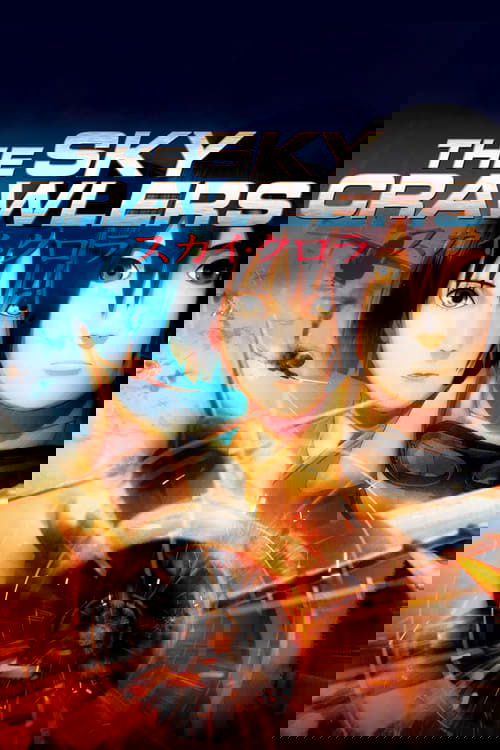
Youngsters called Kildren, who are destined to live eternally in their adolescence. The Kildren are conscious that every day could be the last, because they fight a war as entertainment, organized and operated by adults. But as they embrace the reality they are faced with, they live their day-to-day lives to the full.
Get the Weekly Woke Watchlist
New and trending movies scored for woke bias, preachy messaging, and forced political themes — before you waste your evening.
No spam. One useful email per week.
Overall Series Review
Categorical Breakdown
The narrative is completely focused on a fictional, existential identity: the Kildren, perpetually adolescent clones. There is no element of real-world race, class, or intersectional hierarchy in the character dynamics or plot. Character value is based solely on piloting merit and personal resolve against the 'System.' Casting is entirely consistent with a non-politicized, ethnically-uniform Japanese animated production.
The system being critiqued is a highly abstract, globalized, and corporate-run 'war-as-spectacle' institution, not any specific real-world Western civilization, home, or national heritage. The fictional world uses a non-specific retro-European, WWII-inspired aesthetic, but the hostility is toward the self-perpetuating nature of meaningless conflict and the complicit 'adult' spectators, not a cultural heritage or ancestors. The critique is allegorical and broad, not nationalistic self-hatred.
The main female character, Kusanagi, is a commanding officer and skilled pilot who is emotionally complex and burdened by her past, including having a daughter whose existence defies the normal Kildren life. She is a powerful figure, but she is flawed and complicit in the toxic system, avoiding the 'Mary Sue' archetype. The theme of children (Kildren) and motherhood is central to the film’s philosophical dilemma about creating life in a cruel world, which is a form of philosophical anti-natalism, but it is not framed through a modern 'motherhood is a prison' or 'career is the only fulfillment' lens.
The movie contains no focus on alternative sexualities, gender ideology, or the deconstruction of the nuclear family. The Kildren are defined by their unique cloned biology and eternal adolescence. The relationships, including the implied one between the male protagonist and his female commander, follow a traditional structure, with the thematic focus remaining on existential dread and the cycle of life.
The film operates within a profound spiritual vacuum where there is no mention of traditional religion, specifically Christianity. The philosophical outlook is highly nihilistic and cyclical, suggesting objective meaning is absent and morality is subjective to the 'System' that dictates war's purpose. This presents a spiritual vacuum and a form of moral relativism, but the plot does not include any deliberate demonization of faith or religious figures, making the absence of faith an abstract thematic device rather than an act of anti-theistic vilification.
Get the Weekly Woke Watchlist
New and trending movies scored for woke bias, preachy messaging, and forced political themes — before you waste your evening.
No spam. One useful email per week.