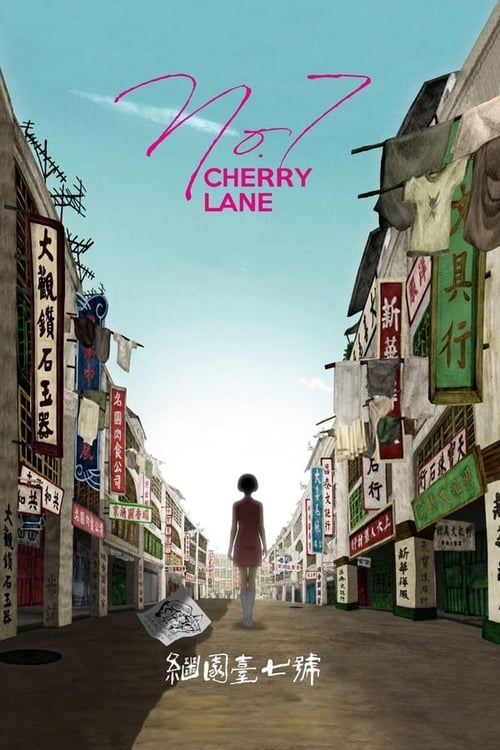
No. 7 Cherry Lane
Plot
Set in Hong Kong in 1967 — a time of complex politics when it was still a British colony — No. 7 Cherry Lane revolves around a love triangle between a university student, a single mother and her teenage daughter.
Get the Weekly Woke Watchlist
New and trending movies scored for woke bias, preachy messaging, and forced political themes — before you waste your evening.
No spam. One useful email per week.
Overall Series Review
Categorical Breakdown
The narrative does not center on an intersectional lens or privilege. Character conflict is purely personal and erotic, not based on immutable characteristics or systemic oppression. The casting is historically authentic for the Hong Kong setting, and the local political turbulence is kept secondary to the core drama of personal desire.
The film is an explicit 'romantic paean' and work of 'pure nostalgia' dedicated to the director's memory of 1967 Hong Kong, framed as a beautiful, lost 'golden age.' This perspective is a celebration of home culture and heritage, directly contradicting the deconstruction of heritage or civilizational self-hatred.
Mrs. Yu is portrayed as a 'liberated and attractive woman' and 'entrepreneur,' who is 'not a motherly type,' which subtly pushes against the celebration of traditional roles. The female lead's personal fulfillment is found outside the nuclear family structure and traditional motherhood, but the male lead, Ziming, is a highly desirable, sensitive intellectual, not a bumbling or toxic figure.
The film explicitly centers alternative sexualities and non-normative desire. The male protagonist is lusted after by men and women alike, and the plot includes multiple prominent and sexually explicit homoerotic scenes, such as two men showering together while being peeped on, and a surreal sexual fantasy involving the male lead and another boy. This focus places a non-traditional sexual identity at the heart of the film's atmosphere and artistic vision.
The movie operates in a purely secular and subjective moral space. The entire narrative focuses on sensuality, desire, and fantasy as life's central concern, implying a reality without objective, transcendent truth. Traditional religion is ignored entirely, and the story’s highly subjective moral landscape is defined by personal longing and emotional experience.
Get the Weekly Woke Watchlist
New and trending movies scored for woke bias, preachy messaging, and forced political themes — before you waste your evening.
No spam. One useful email per week.