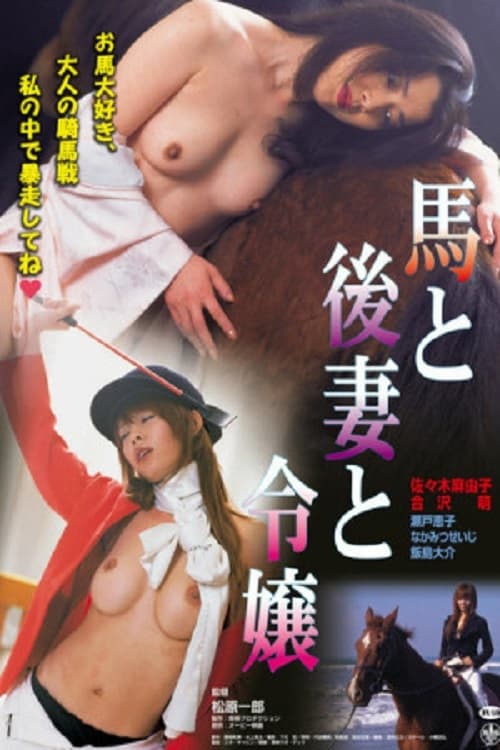
Horse, Second Wife and Daughter
Plot
Kensaku is a sexually impaired wealthy man who owns a stable. His current wife is Emiko, who became his full-time wife after being his mistress. One day, a former racehorse, Brian Hawk, comes to Kensaku’s stables as a stallion. Emiko feels a sense of intimacy when she learns of the horse’s struggles when it ran in the central race. One day, when Kensaku goes on a business trip, Emiko is subjected to sexual humiliation by her stepdaughter, Yuri, her stablehand, and her maid.
Get the Weekly Woke Watchlist
New and trending movies scored for woke bias, preachy messaging, and forced political themes — before you waste your evening.
No spam. One useful email per week.
Overall Series Review
Categorical Breakdown
The story is a domestic Japanese drama focused on individual sexual and familial conflicts. Character worth is determined by personal morality and action, not race or intersectional hierarchy. No commentary on 'whiteness,' privilege, or systemic oppression is present.
The film critiques the morality and behavior of a specific, wealthy family, not the fundamental institutions of the nation or Western civilization. The drama is purely a localized story of moral chaos and familial destruction, with no element of civilizational self-hatred or demonization of ancestors.
While the movie features deeply destructive, anti-family behavior (adultery, sexual sadism/humiliation), it does not promote the 'Girl Boss' or 'Mary Sue' trope. The female protagonist is a victim, and the female aggressors are portrayed as sadistic, not as empowered, flawless heroes. The focus is on individual perversion, not an ideological critique of gender roles or a promotion of career over motherhood.
The narrative centers on transgressive sexual and family dynamics, but these are personal acts of deviance and sadism, not a platform for promoting modern 'Queer Theory' or gender ideology. The core relationship structure is male-female, and no political lecture on sexual identity or the deconstruction of the nuclear family through a modern ideological lens is present.
The movie is a secular drama of personal immorality. There is no presence of traditional religion, specifically Christianity, in the narrative, and therefore no anti-theistic vilification or promotion of moral relativism as a philosophical tenet.
Get the Weekly Woke Watchlist
New and trending movies scored for woke bias, preachy messaging, and forced political themes — before you waste your evening.
No spam. One useful email per week.