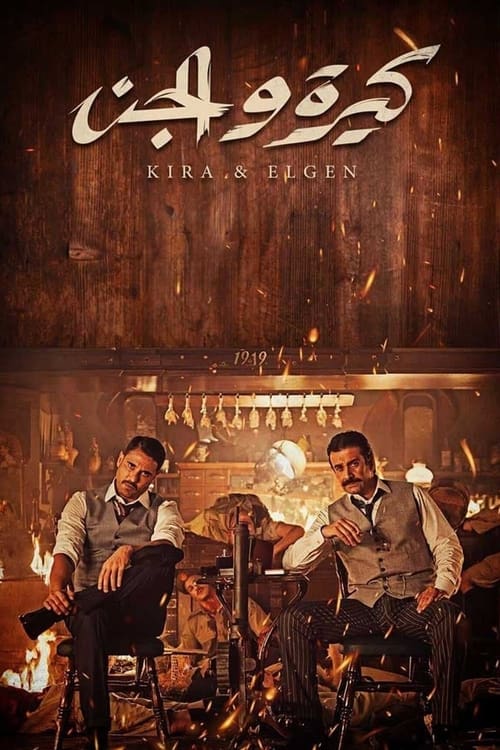
Kira & El Gen
Plot
The movie focuses on the fury state that was among the people in synchronization with the main event in Egypt: The 1919 Egyptian Revolution which unites the fates of Kira and El Gen to participate in the struggle against the British occupation.
Get the Weekly Woke Watchlist
New and trending movies scored for woke bias, preachy messaging, and forced political themes — before you waste your evening.
No spam. One useful email per week.
Overall Series Review
Categorical Breakdown
The plot is an 'us vs. them' conflict where the 'them' are the British colonizers, which inherently involves an identity-based struggle between colonizer and colonized. However, the narrative does not use an intersectional lens to lecture on privilege or systemic oppression in the style of modern Western media. Characters like the drug dealer El Gen are judged by their merit and commitment to the national cause, aligning the film more with a universal meritocracy within a liberation context. The clear historical villain is the foreign occupier, not a domestic 'whiteness' or an intersectional hierarchy.
The film functions as a patriotic, national epic that explicitly valorizes the Egyptian culture, history, and people in their struggle against a foreign occupier. The narrative emphasizes national unity, resistance, and reclaiming the home culture, which is the direct opposite of civilizational self-hatred.
The most prominent female character, Dawlat Fahmy, is portrayed as a heroic leader in the resistance movement. Her role is celebrated for its strength and political action while simultaneously acknowledging her role in 'caring for their families.' This representation elevates the female protagonist without resorting to the 'Girl Boss' trope that emasculates male characters or promotes anti-natalism, instead favoring a complementary view of gender roles.
The focus of the entire film is the Egyptian national struggle against the British in 1919. There is no evidence of centering alternative sexualities, promoting gender ideology, or deconstructing the traditional nuclear family. The social context of the time and the film's setting as a national epic prioritize the themes of war, resistance, and national identity.
The conflict is framed as a moral struggle for justice against colonial oppression, not a deconstruction of faith. The cultural and historical context of the setting ensures that the traditional religion is a fundamental, integrated component of the society being defended, not a source of corruption or bigotry. The moral high ground is consistently maintained by the heroes seeking justice, tying morality to a transcendent ideal rather than subjective power dynamics.
Get the Weekly Woke Watchlist
New and trending movies scored for woke bias, preachy messaging, and forced political themes — before you waste your evening.
No spam. One useful email per week.