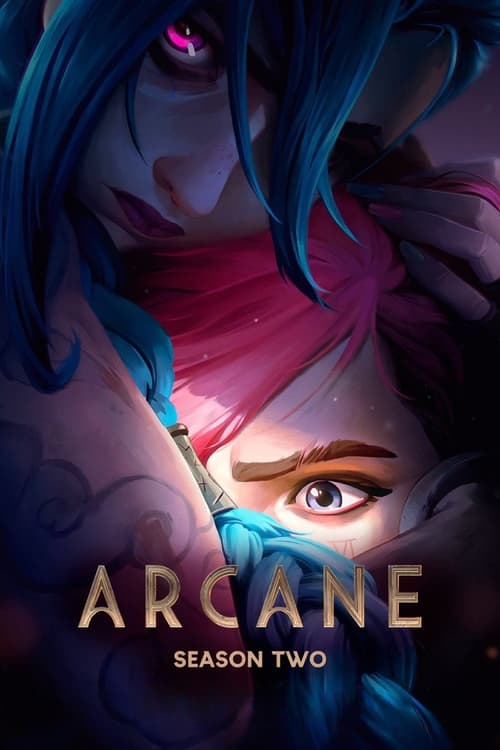
Arcane
Season 2 Analysis
Season Overview
Alliances are forged, allegiances are smashed and fresh dangers emerge as the battle between Piltover and Zaun inspires both glory and heartbreak.
Season Review
Categorical Breakdown
The core of the show is a class conflict between the wealthy, white-coded (Piltover) and the marginalized (Zaun), which functions as a strong analog for intersectional systemic oppression. Characters are continuously defined by their immutable class and social status, such as Caitlyn, a privileged, wealthy 'cop' from the top city, and Vi, a working-class 'butch' from the undercity. The narrative critiques the wealthy establishment as the root of all suffering and vilifies the systems of the elite as fundamentally corrupt.
The established, orderly, and technologically advanced 'home' city-state of Piltover is consistently framed as the oppressive, elitist villain responsible for the chaos and suffering of the 'other' culture in Zaun. The entire premise rests on a deconstruction of the supposedly great civilization, suggesting its prosperity is fundamentally rotten and built on systemic oppression, which perfectly aligns with the 'Home culture framed as fundamentally corrupt' trope.
Female characters consistently drive the political and military plot, holding nearly all positions of ultimate power, including Mel Medarda's mother, Ambessa, a Machiavellian military ruler, and Caitlyn's rise to a position of dictatorial power. The main protagonists, Jinx and Vi, and antagonist, Ambessa, are all women, dominating the screen time and narrative focus. Men like Jayce and Viktor are mostly relegated to scientist or supportive roles and are often shown to be morally compromised or ineffective in the face of female action.
The core romantic relationship between two of the main female protagonists, Vi and Caitlyn, moves from subtext to an explicit, on-screen 'openly queer partnership' with a highly publicized sex scene. This centers alternative sexuality not only as a minor trait but as a key, celebrated, and emotional anchor of the entire narrative, making it one of the most important aspects of the main character's lives.
The primary philosophical conflicts revolve around technology, science, and the morality of class struggle rather than organized religion. There is no explicit presence of a traditional religious institution, nor is there a direct villain or storyline that seeks to lecture against Christianity or a higher moral law. The show embraces moral relativism based on political necessity, a common theme in modern fantasy, but lacks the specific hostility toward traditional faith required for a high score in this category.