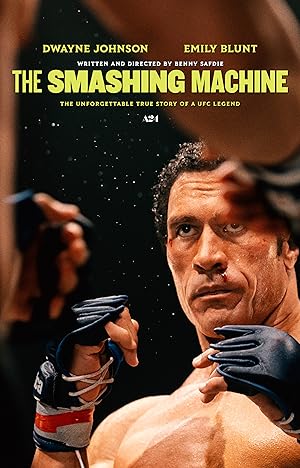
The Smashing Machine
Plot
The story of mixed-martial arts and UFC champion, Mark Kerr.
Get the Weekly Woke Watchlist
New and trending movies scored for woke bias, preachy messaging, and forced political themes — before you waste your evening.
No spam. One useful email per week.
Overall Series Review
Categorical Breakdown
The narrative centers on the individual merit and ultimate personal failure of Mark Kerr, a specific historical athlete, rather than his immutable characteristics or an 'intersectional' hierarchy. The core drama is addiction and physical breakdown. The casting of Dwayne Johnson as a character who is white in real life is a non-political choice driven by star power and dramatic transformation, not a lecture on race-swapping or 'whiteness' vilification.
The focus is on the personal collapse of the protagonist and the chaotic, unregulated nature of the early MMA world, not a critique of Western civilization itself. The film depicts Kerr's existential crisis and personal demons rather than demonizing his home culture or ancestors. The international setting in Japan is an authentic reflection of the sport's history, not a 'Noble Savage' comparison.
The female lead, Dawn Staples, is a flawed and complex character who is actively involved in the male protagonist's downward spiral and drug use, even being described as 'enabling' and 'high-maintenance' by reviewers. She struggles with her own emotional issues, attempting suicide and needing care. The character is portrayed as a co-dependent figure in a toxic relationship, not a 'Mary Sue' or an instantly perfect 'Girl Boss' who exists to emasculate men.
The story strictly focuses on the intense and often dysfunctional heterosexual relationship between Mark Kerr and Dawn Staples. No characters are defined or centered by alternative sexual ideologies. The narrative does not contain commentary or lecturing on gender theory or the deconstruction of the nuclear family structure.
The core thematic content deals with addiction, fame, vulnerability, and the physical/psychological cost of an extreme sport. There is no presence of organized religion or a spiritual framework in the plot summaries or critical reviews. The film is a study of human weakness and internal conflict, maintaining a position of moral neutrality without hostility toward faith.
Get the Weekly Woke Watchlist
New and trending movies scored for woke bias, preachy messaging, and forced political themes — before you waste your evening.
No spam. One useful email per week.