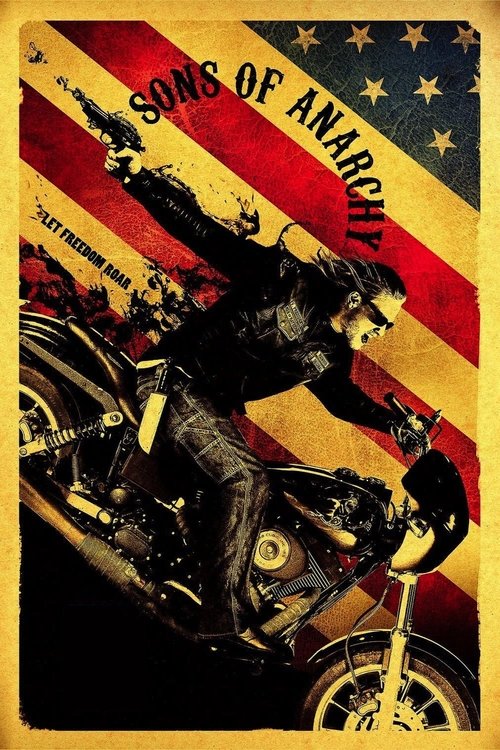
Sons of Anarchy
Season 2 Analysis
Season Overview
Reeling from the combined pressure of an ATF crackdown and an unprovoked murder, the Sons face a far more deadly threat from a cold-blooded enemy who wil stop at nothing to drive them out of Charming for good. As Jax and Clay square off over questions of leadership and loyalty, lines are drawn and chaos reigns as the club threatens to destroy itself—from the inside out.
Season Review
Categorical Breakdown
The main conflict pits a white outlaw motorcycle club against an explicitly white separatist, Neo-Nazi group (LOAN). The narrative uses the Neo-Nazis as an obvious, irredeemable evil, which causes the audience to align with the protagonists, who are also predominantly white. Character judgment is based on competence, loyalty, and their role in the criminal/family hierarchy, not an intersectional framework. The presence of allied and rival gangs of different races is for plot convenience and criminal enterprise, not for a lecture on systemic oppression.
The central dramatic energy revolves around defending 'home'—the small town of Charming and the club's physical clubhouse—from outside threats like the Neo-Nazis and the ATF. While the main characters are anti-establishment outlaws, the show emphasizes the importance of their chosen institutions: the club and the family. The conflict is less about civilizational self-hatred and more about an internal critique of the club’s deviation from its own founding principles of community and idealism.
Female characters like Gemma and Tara are strong and central to the plot. Gemma functions as a powerful, hyper-competent matriarch who dictates much of the club's moral and domestic direction. Tara develops from an outsider into a protective figure, with a focus on her role as a motherly figure to Jax's son. Men are portrayed as complex, violent, and flawed, but are not consistently depicted as bumbling or incompetent, which keeps the score moderate. The narrative does not promote an anti-natalist or 'career is the only fulfillment' message; family and motherhood are key pillars.
The core of the show’s social structure is the hyper-masculine brotherhood of the club and the traditional male-female pairings of the main characters. Sexual identity is not a driving or central force in the narrative. The plot focuses on outlaw life, loyalty, and family preservation within a normative male-female structure, with no inclusion of or lecturing on gender theory or alternative sexualities.
The world of the show is one of deep moral ambiguity where the 'heroes' are criminals, reflecting a type of moral relativism. However, the season does not directly target or vilify traditional religion, specifically Christianity. Characters operate outside of a higher moral law, but this is a consequence of their outlaw lifestyle, not a philosophical argument for the non-existence or evil of God. Faith or religious critique is not a significant theme.