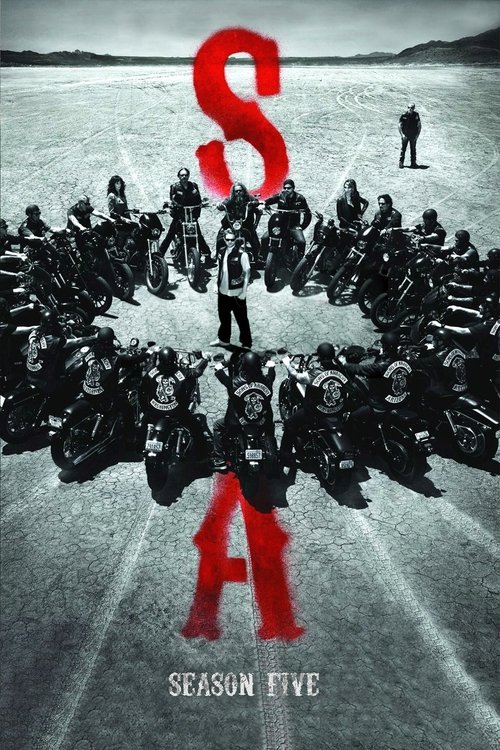
Sons of Anarchy
Season 5 Analysis
Season Overview
This season begins with Jax and Tara as the club’s new king and queen after learning the truth behind his father's death and facing the consequences of the club's illicit deeds. Stripped of his patch after Jax discovers he was complicit in John Teller’s death, Clay recovers from gunshot wounds that nearly killed him while Gemma is faced with a new life without the comfort of her family. With the threat of RICO still looming, Jax has to find a way to protect his family and save his club as SAMCRO is pulled into a conflict with a potent new enemy.
Season Review
Categorical Breakdown
The narrative does not center on an explicit lecture on 'privilege' or systemic oppression. The main conflict is criminal-vs-criminal, but it is heavily racialized. The new primary antagonist, Damon Pope, is a Black businessman and crime boss, and Jax's main alliances and rivalries involve powerful non-White gangs (Mayans, Triads, Niners). The White protagonist group, SAMCRO, is vilified not for their race but for their criminal incompetence and amorality.
The central theme is the internal corruption of the club's founding vision, which is a critique of an institution, not a sweeping indictment of Western civilization. The 'ancestor' (John Teller) is an idealized figure whose written manifesto guides the protagonist's attempts to reform the club, showing respect for the original heritage. The environment is framed as a moral cage of the main characters' own making, not a fundamentally corrupt home culture.
Female leads, Gemma and Tara, hold immense power and are the primary drivers of family and club conflict through political and manipulative means. Tara is an accomplished surgeon who willingly ties her career and life to the club, a choice one critic noted engages contemporary feminist debate. She is not a 'Mary Sue' but is capable of ruthless acts of manipulation, including with Otto, and openly challenges the male hierarchy. Motherhood is a profound motivator but is constantly shown as being in conflict with the women's proximity to power.
The season features the significant and recurring introduction of Venus Van Damme, a transgender prostitute, who becomes a sympathetic contact and ally to the club. The character's presence and the club members' reactions, which range from discomfort to an uneasy, pragmatic acceptance, introduce non-normative sexuality into the foreground of a highly masculine environment. Sexuality is not kept private, and an alternative identity is briefly centered in the plot, warranting a moderate-to-high score.
The entire moral framework is relativistic, operating on the subjective 'power dynamics' of an outlaw code. There is a complete absence of transcendent morality or objective good; characters are judged only by their loyalty to the club's corrupt code or their capacity for self-serving pragmatism. Faith is not presented as a source of strength, and the narrative exists purely within a secular, amoral vacuum where moral boundaries are constantly crossed by all characters for self-preservation.