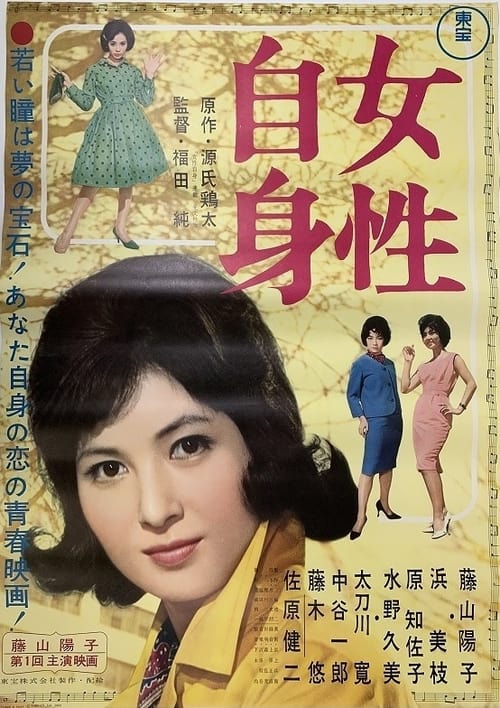
A Woman's Identity
Plot
1962 Japanese movie
Get the Weekly Woke Watchlist
New and trending movies scored for woke bias, preachy messaging, and forced political themes — before you waste your evening.
No spam. One useful email per week.
Overall Series Review
Categorical Breakdown
The entire cast is racially homogeneous, as expected for a 1962 Japanese domestic film. The narrative conflict is entirely centered on family dynamics, finance, and changing social expectations within that culture. There is no focus on race, immutable characteristics, or vilification of 'whiteness.' Character judgment is based purely on individual merit and virtue, such as duty and honesty.
The film offers a critique of 'increasingly selfish post-war society' and the pressures of a new 'corporate Japan' that puts financial pressure on the family. This is a critique of modern societal trends, not a hatred of the core Japanese cultural foundation or ancestors. The film's resolution—where the elders and the virtuous widow choose a peaceful, smaller life defined by genuine connection—is a form of preserving core values against chaos.
The score is elevated because male characters are consistently portrayed as either deceased, goofy, incompetent, or outright cads and deceivers. The virtuous protagonist, Yoshiko, is an extremely competent woman who runs the family business and is the moral anchor. However, the film resists the 'Girl Boss' trope by explicitly depicting the career-focused daughter, Umeko, as 'cruel and embittered' and 'aggressively miserable,' and celebrates the traditional, protective role of motherhood and the daughter-in-law's duty.
The narrative is a period-authentic domestic drama completely focused on the traditional nuclear and extended family structure. All major plot points revolve around conventional marriage, widowhood, and the fate of progeny. There is no presence of alternative sexualities, gender ideology, or deconstruction of the male-female pairing.
The film is a secular domestic drama. The moral framework is built upon objective human virtues like duty, selflessness, and honesty, as seen in the clear distinction between the good-hearted widow and the deceitful, amoral cad. There is no hostility toward Christianity, or any other traditional religion, nor is morality framed as subjective 'power dynamics.'
Get the Weekly Woke Watchlist
New and trending movies scored for woke bias, preachy messaging, and forced political themes — before you waste your evening.
No spam. One useful email per week.