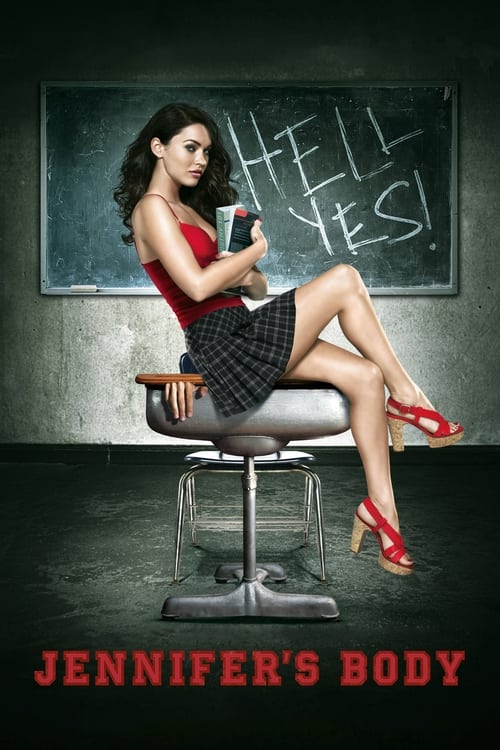
Jennifer's Body
Plot
Jennifer, a gorgeous, seductive cheerleader takes evil to a whole new level after she's possessed by a sinister demon. Now it's up to her best friend to stop Jennifer's reign of terror before it's too late.
Get the Weekly Woke Watchlist
New and trending movies scored for woke bias, preachy messaging, and forced political themes — before you waste your evening.
No spam. One useful email per week.
Overall Series Review
Categorical Breakdown
The main conflict avoids intersectional politics, focusing overwhelmingly on gender. A universal meritocracy is not the standard, but neither is an explicit vilification of whiteness, as the core cast is white. Some dialogue includes culturally insensitive jokes, but the film's plot is not driven by lectures on systemic oppression or immutable characteristics beyond gender.
The setting is a critique of small-town American culture and its superficiality, suggesting hostility toward the 'home' environment. The film does not explicitly deconstruct Western civilization or ancestors on a grand scale, but the local institutions of a high school and a small community are framed as morally vacuous, creating an environment ripe for chaos and demonic power.
The female lead, Jennifer, becomes a demon who preys exclusively on men, turning male desire into a literal weapon against them. Men are consistently depicted as disposable, easily manipulated, or deserving of their grotesque fate. The narrative explicitly positions Jennifer's violent rampage as a form of cathartic revenge against male entitlement and the male gaze. The female protagonists' agency and power are the sole drivers of the plot.
The intense, co-dependent relationship between the two female protagonists is the true love story and emotional center of the film, culminating in an intimate encounter. Critics widely celebrate the film for its sapphic subtext and centering of a queer relationship dynamic. Heteronormative pairings are secondary and framed as obstacles to the girls' deeper bond, positioning alternative sexuality as a key narrative element.
The central catalyst for the plot is a deal with the Devil and a botched Satanic sacrifice, which introduces a dark spiritual power that the girls must contend with. The opening narration explicitly dismisses traditional Christian faith, stating that prayer is ineffective and that 'no one gets off the cross.' Demonic power is embraced by the main antagonist as a tool for survival and revenge, showing morality as subjective and power-based rather than transcendent.
Get the Weekly Woke Watchlist
New and trending movies scored for woke bias, preachy messaging, and forced political themes — before you waste your evening.
No spam. One useful email per week.