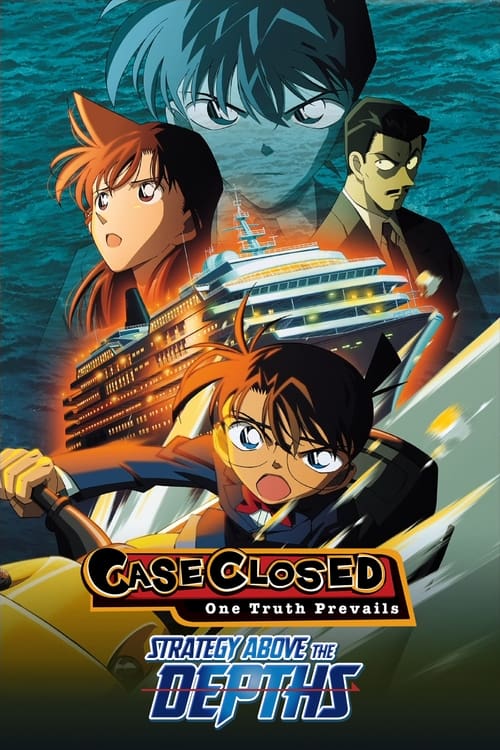
Detective Conan: Strategy Above the Depths
Plot
Fifteen years ago in a barren stretch of the Pacific, a cruise ship collided with an iceberg and was lost at sea. More than a decade later, Hideto Yashiro—a ship engineer—died in a fatal car accident. The unlikely connection between these events only comes to light on the luxury liner St. Aphrodite during her maiden voyage. Aboard it on a much needed vacation, Kogorou Mouri, his daughter Ran, Conan Edogawa, and the Detective Boys enjoy a trip provided by Sonoko Suzuki's family. But their fun is soon cut short when a game of hide-and-seek leads to Sonoko's disappearance.
Get the Weekly Woke Watchlist
New and trending movies scored for woke bias, preachy messaging, and forced political themes — before you waste your evening.
No spam. One useful email per week.
Overall Series Review
Categorical Breakdown
Characters are judged entirely by their actions and intellectual abilities; the movie's main conflict is about greed, insurance fraud, and personal revenge. The cast is culturally authentic, centering on Japanese characters. There is no commentary on race, intersectionality, or the vilification of any specific immutable characteristic.
The plot contains no hostility toward Japanese culture or heritage. The motive for the crime is corporate corruption and personal revenge, not a critique of civilizational institutions. A character's desire to avenge her father's death, who was the captain of the sunken ship, shows respect for the sacrifices of ancestors.
The chief antagonist is a highly capable female ship designer and master manipulator, Minako Akiyoshi, which grants her a measure of 'Girl Boss' competence. However, her actions are criminal, not inspirational, and she is ultimately defeated. The male lead, Kogoro Mouri, is portrayed as a 'Papa Wolf' figure, and his protective masculinity is validated as he correctly solves the case out of loyalty and love for his estranged wife.
The movie adheres to a normative structure. Traditional male-female pairings, particularly the protective dynamic between Ran/Shinichi and the loving relationship between the estranged Kogoro/Eri, are central to the emotional subplot. There is no presence of alternative sexualities, gender ideology, or deconstruction of the nuclear family.
The narrative is entirely secular, focused on a crime and its investigation. The movie is not anti-theistic, as religion is not a factor in the plot or character motivations. The underlying morality is objective, defining murder and fraud as evil acts that must be solved and punished by law.
Get the Weekly Woke Watchlist
New and trending movies scored for woke bias, preachy messaging, and forced political themes — before you waste your evening.
No spam. One useful email per week.