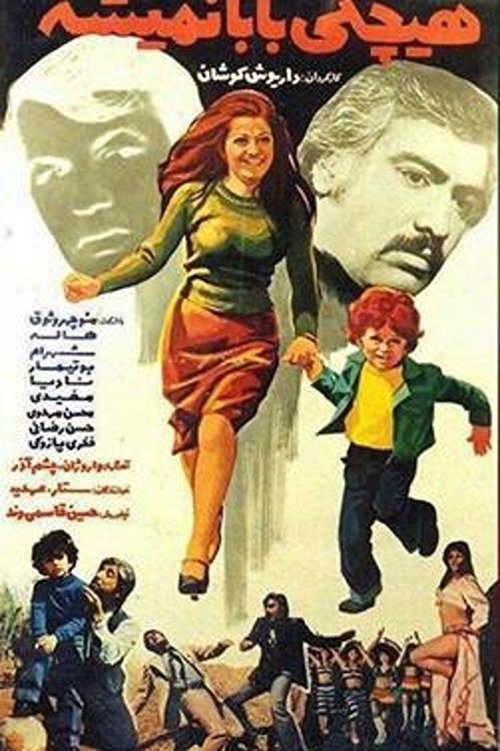
No One Can be My Dad
Plot
Ali meets a wealthy man named Dara and works as a trusted person in his factory.
Get the Weekly Woke Watchlist
New and trending movies scored for woke bias, preachy messaging, and forced political themes — before you waste your evening.
No spam. One useful email per week.
Overall Series Review
Categorical Breakdown
The narrative is primarily concerned with class difference, pitting the poor protagonist Ali against the wealthy Dara. It explores themes of personal merit and trustworthiness in a business setting. The casting reflects the Iranian population of the era, and there is no vilification of 'whiteness' or forced intersectional hierarchy, which are themes specific to contemporary Western media. Character value is determined by action and loyalty.
The film does not focus on Western civilization, but rather on Iranian society and its internal class dynamics. Any critique is directed at local social or economic imbalances, not a fundamental hatred of 'Western home culture' or 'ancestors.' Core institutions like the family and national identity are treated as the standard framework for the story, viewing them as positive structures.
As a popular Iranian film of the 1970s, it operates within a framework of traditional gender roles and family expectations. The story's focus is on the male-dominated world of the factory owner and the worker. While the film may feature strong female characters common to the genre, there is no evidence of 'Girl Boss' or 'Mary Sue' tropes, male emasculation, or anti-natalist messaging to promote a career-over-family ethos. Gender roles are distinct and complementary.
The film’s setting and genre predate the advent of modern 'queer theory' and gender ideology. The focus is exclusively on normative male-female pairing and the traditional nuclear family structure. The narrative treats sexuality as a private matter or within the context of family melodrama, without any centering of alternative sexualities, deconstruction of biological reality, or social lecturing.
The film is set in a culturally and historically religious society. The plot does not feature hostility toward religion (specifically Christianity) or frame it as a root of evil. Moral questions are likely resolved within a framework of justice, honor, and established, objective moral law, aligning with the cultural context rather than embracing a philosophy of subjective 'power dynamics' or moral relativism.
Get the Weekly Woke Watchlist
New and trending movies scored for woke bias, preachy messaging, and forced political themes — before you waste your evening.
No spam. One useful email per week.