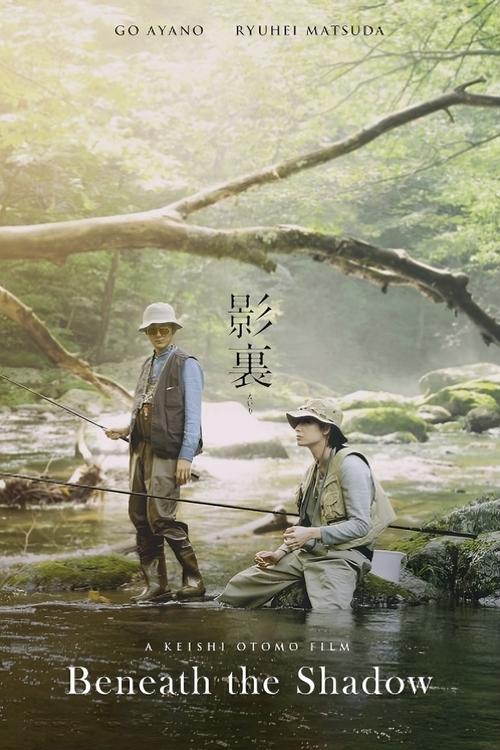
Beneath the Shadow
Plot
From coworkers to close friends, Konno and Hiasa drift apart. When Hiasa goes missing, Konno must face what he didn’t say in time.
Get the Weekly Woke Watchlist
New and trending movies scored for woke bias, preachy messaging, and forced political themes — before you waste your evening.
No spam. One useful email per week.
Overall Series Review
Categorical Breakdown
The story is a Japanese drama set in Japan with a full Japanese cast, centering on personal relationships and loss. There is no reliance on Western-style intersectional hierarchy or the vilification of any immutable characteristic. Characters are judged solely by their individual actions and emotional depth.
The setting is Morioka, Japan, before and after the 2011 Great East Japan Earthquake. The film uses the disaster and the local environment, including a Sansa dance performance, as a backdrop for the characters' emotional lives. This focus on a sense of place and local culture does not frame the home culture as fundamentally corrupt or racist. Any critique is aimed at the monotony and solitude of modern life, not a wholesale rejection of the civilization or its ancestors.
The core relationship and narrative focus entirely on two male leads, Konno and Hiasa. Female characters are minor, non-heroic roles, such as a mother figure or an old male lover's partner, and do not exhibit the 'Girl Boss' trope. The plot is not concerned with anti-natalism or career-over-family messaging.
The main character, Konno, is clearly established as a gay man whose entire emotional arc and the central conflict of the narrative are driven by his unrequited romantic desire for his male friend, Hiasa. The story is an adaptation of a 'queer drama novella' and culminates in the main character embracing his sexuality in full-light. This positions sexual identity as the most critical defining trait for the protagonist and is central to the film's entire plot structure.
The drama focuses on personal, secular themes of loneliness, friendship, and loss, framed by a natural disaster. There is no presence of traditional religion, specifically Christianity, to be attacked or vilified. Moral ambiguity exists in Hiasa’s actions and disappearance, but the movie explores subjective grief and complicated human bonds rather than explicitly lecturing on moral relativism or objective truth.
Get the Weekly Woke Watchlist
New and trending movies scored for woke bias, preachy messaging, and forced political themes — before you waste your evening.
No spam. One useful email per week.