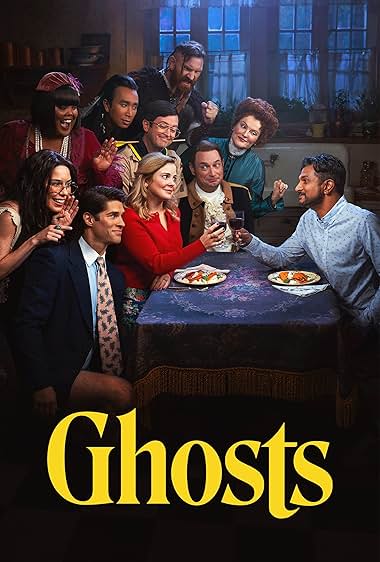
Ghosts
Series Overview
Cheerful freelance journalist Samantha and Jay, an up-and-coming chef from the city, throw both caution and money to the wind when they decide to convert a huge run-down country estate they inherited into a bed-and-breakfast--until they discover that it is inhabited by the spirits of many deceased former residents. The departed souls are a close-knit, eclectic group that includes a saucy Prohibition-era lounge singer, a pompous 1700s Militiaman, a 1960s hippie fond of hallucinogens, and an overly upbeat '80s scout-troop leader. If the spirits were anxious about the commotion a renovation and B&B will create in their home, it's nothing compared to when they realize Samantha is the first live person who can see and hear them.
Get the Weekly Woke Watchlist
New and trending movies scored for woke bias, preachy messaging, and forced political themes — before you waste your evening.
No spam. One useful email per week.
Overall Series Review
Categorical Breakdown
The cast is meticulously constructed to hit diverse demographic markers, including Native American, Black, and Asian-American representation. Storylines often focus on the grievances of marginalized groups, such as the displacement of the Lenape people and the struggles of a Black woman in the 1920s jazz scene. Characters are frequently defined by their relationship to systemic oppression.
Historical figures like the Revolutionary War officer and the Gilded Age matriarch are portrayed as deeply flawed, bigoted, or out of touch. Their traditional values are framed as obstacles to be overcome. The narrative often mocks the foundations of early American society while celebrating the dismantling of those ancestral legacies.
Female characters like Sam and Alberta are portrayed as assertive and highly competent, while male characters like Jay and Pete often fill the role of the 'bumbling' or submissive beta male. The show emphasizes female liberation from historical domesticity, specifically through Hetty’s journey of self-discovery outside of her marriage.
A central, multi-season plot arc involves a Revolutionary War hero coming out as gay and navigating a same-sex relationship. The show also features polyamory and bisexual themes through the character Flower. These elements are not just present but are treated as primary, celebrated plot points.
The series replaces traditional religious views of the afterlife with a secular, comedic system of 'getting sucked off' to a higher plane. Faith is largely absent, and spiritual progression is tied to resolving earthly psychological trauma and adopting modern moral standards rather than adherence to transcendent religious truths.
Get the Weekly Woke Watchlist
New and trending movies scored for woke bias, preachy messaging, and forced political themes — before you waste your evening.
No spam. One useful email per week.