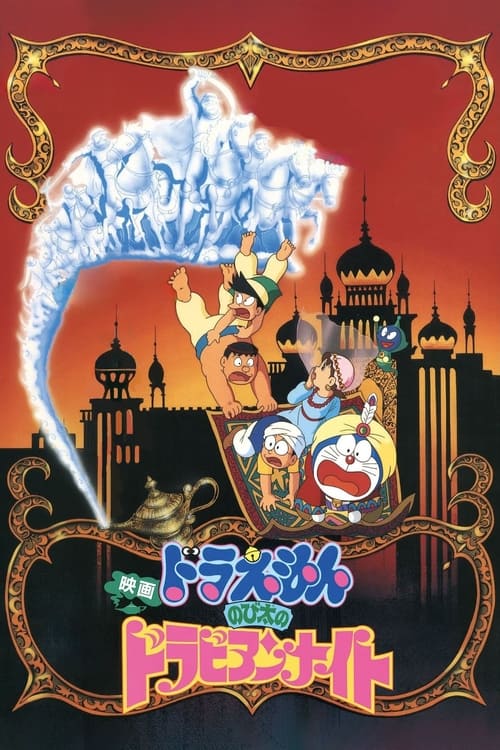
Doraemon: Nobita's Dorabian Nights
Plot
With Doraemon's "Storybook Shoes" gadget, he and Nobita go to different stories to watch them. Nobita asks Doraemon to allow him to share this gadget with Shizuka and Doraemon agrees.
Get the Weekly Woke Watchlist
New and trending movies scored for woke bias, preachy messaging, and forced political themes — before you waste your evening.
No spam. One useful email per week.
Overall Series Review
Categorical Breakdown
The main conflict is a universal good vs. evil struggle between the Japanese children and the Arab bandits/slavers, not a commentary on race or immutable characteristics. Character merit and courage determine the outcome. No vilification of 'whiteness' or forced diversity is present.
The narrative is entirely focused on an exciting, non-Japanese, historical fantasy world. The home culture of the protagonists (Japan) is not featured for deconstruction or demonization, and the civilization they visit is viewed neutrally or positively, with virtuous figures like the Caliph Harun al-Rashid balancing the wicked ones. The central institution of friendship is a shield against chaos.
Shizuka is the classic damsel-in-distress who needs rescuing after being captured with the intent of being sold into slavery. Her primary role drives the male protagonists' adventure. Masculinity is protective, and there is no 'Girl Boss' or anti-natalist messaging. The gender dynamics reflect a traditional complementarian structure.
The movie, a 1991 children's film, presents a traditional male-female pairing structure. No themes relating to alternative sexualities, gender ideology, or the deconstruction of the nuclear family are present in the plot.
The setting is the Abbasid Caliphate, and a key benevolent figure is Caliph Harun al-Rashid. The moral conflict is strictly objective, pitting the heroes against bandits, thieves, and slavers. The plot embraces a transcendent morality where evil is a real, external force to be defeated, and faith/religion are neither mocked nor attacked.
Get the Weekly Woke Watchlist
New and trending movies scored for woke bias, preachy messaging, and forced political themes — before you waste your evening.
No spam. One useful email per week.