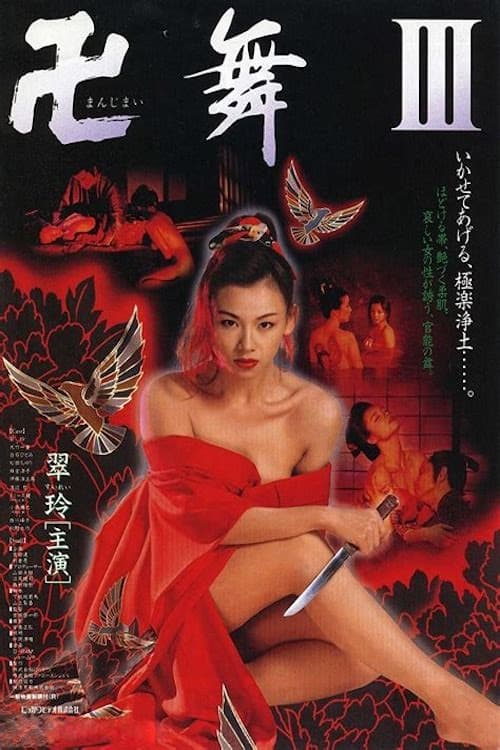
Manji Mai 3: I will let you go Paradise Jodo
Plot
The female ninja butterfly was the daughter of a large store five years ago. The butterfly is in love with the Ronin Kurokawa Gennoshin, and one night he abandons everything and leaves the house to be with him, but he…
Get the Weekly Woke Watchlist
New and trending movies scored for woke bias, preachy messaging, and forced political themes — before you waste your evening.
No spam. One useful email per week.
Overall Series Review
Categorical Breakdown
The narrative is set in Edo-period Japan and is not concerned with race or intersectional hierarchy based on modern Western identity politics. Characters are defined by their personal moral choices, status (merchant, ronin, concubine), and actions (betrayal, revenge). Meritocracy is subverted by treachery, not systemic oppression based on immutable characteristics. The film features an entirely Japanese cast appropriate for the historical setting.
The movie is a Japanese period piece and does not engage with Western civilization at all. The criticism present is directed at internal Japanese corruption and personal moral failings within the samurai and government classes of the time. This critique of corruption is standard for the jidaigeki genre and does not constitute civilizational self-hatred toward the West or one's own home culture in the defined sense.
The female protagonist is a quintessential avenger who survives a violent betrayal and assault, then weaponizes her body and combat skills to seek retribution. The narrative frames her transformation and 'career' as a ruthless courtesan/ninja as the path to empowerment, which celebrates an anti-family, singular-focus female character. Her success is achieved by using the tactics of her oppressors against them, fitting the 'Girl Boss' trope of a woman rising to power by ruthlessness. Men are frequently depicted as treacherous, violent, and morally corrupt villains.
The plot centers on a traditional male-female relationship and the resulting betrayal. The entire conflict is driven by this heterosexual dynamic. There is no presence of alternative sexualities being centered, deconstruction of the nuclear family structure, or discussion of gender ideology. Sexuality is treated as a private, often exploitative, element of the erotic genre, not as a political identity.
The movie is set in a context of Japanese moral and spiritual frameworks (implied by the title's use of 'Jodo' or Pure Land). The conflict is one of moral and personal retribution for betrayal and murder. There is no discernible hostility toward traditional religion, especially Christianity. Morality is clearly defined by the grievous wrong of the betrayal, and the quest for revenge is an objective response to a defined sin, which acknowledges a higher moral law of cause and effect, even if the result is violent personal justice.
Get the Weekly Woke Watchlist
New and trending movies scored for woke bias, preachy messaging, and forced political themes — before you waste your evening.
No spam. One useful email per week.