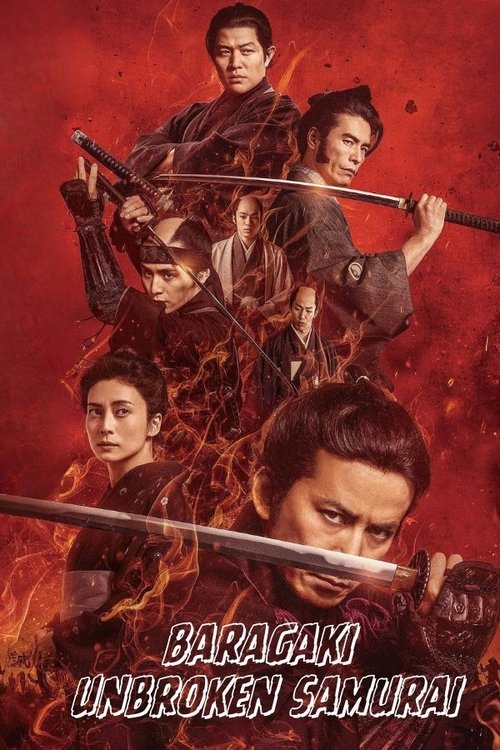
Baragaki: Unbroken Samurai
Plot
Set in the 19th century, "Moeyo Ken" follows the life of Toshizo Hijikata. He was the vice-commander of the Shinsengumi and fought against the Meiji Restoration.
Get the Weekly Woke Watchlist
New and trending movies scored for woke bias, preachy messaging, and forced political themes — before you waste your evening.
No spam. One useful email per week.
Overall Series Review
Categorical Breakdown
The narrative centers on Hijikata Toshizo, a farmer who rises to vice-commander of the Shinsengumi based on his skill, valor, and strict adherence to the samurai code, explicitly demonstrating meritocracy over class-based hierarchy. The story’s entire premise undercuts the idea that one's birthright or immutable characteristics determine their worth or rank. Casting is historically authentic to 19th-century Japan without any race-swapping or political lecturing.
The movie is a Japanese historical epic with no Western characters to vilify. The core conflict is an internal Japanese civil war between those supporting the traditional Tokugawa Shogunate and those supporting the Emperor/Restoration. While the film presents a sober, and at times nihilistic, view of the Shinsengumi’s brutal methods, this internal critique is a historical corrective, not civilizational self-hatred favoring an outside culture. The primary values championed by the protagonist are loyalty to the Shogun and the traditional Japanese warrior's code.
The gender dynamics are traditional and complementary. The plot is male-centric, focusing on the masculine world of political and military conflict. The protagonist is depicted as an 'alpha male' whose skill with the sword is unquestioned. The main female character, a widow and artist, is a quiet, supportive love interest, providing an emotional anchor to the male lead without becoming a 'Girl Boss' or co-opting the military plot.
The film does not feature any elements of alternative sexualities, gender ideology, or deconstruction of the nuclear family. The single romantic plot is a chaste, traditional heterosexual relationship. The focus is exclusively on the historical political and military events, conforming to a normative male-female structure.
The narrative's moral framework is based on the secular moral code of Bushido (loyalty, honor, duty) rather than a critique of religion. The film’s somber conclusion suggests an existential tragedy where the adherence to principles leaves the protagonist with 'nothing to fight for but fighting itself,' implying a vacuum of purpose. This is a form of philosophical nihilism related to the trauma of war and a lost cause, not a specific anti-theistic attack on traditional religion or Christianity.
Get the Weekly Woke Watchlist
New and trending movies scored for woke bias, preachy messaging, and forced political themes — before you waste your evening.
No spam. One useful email per week.