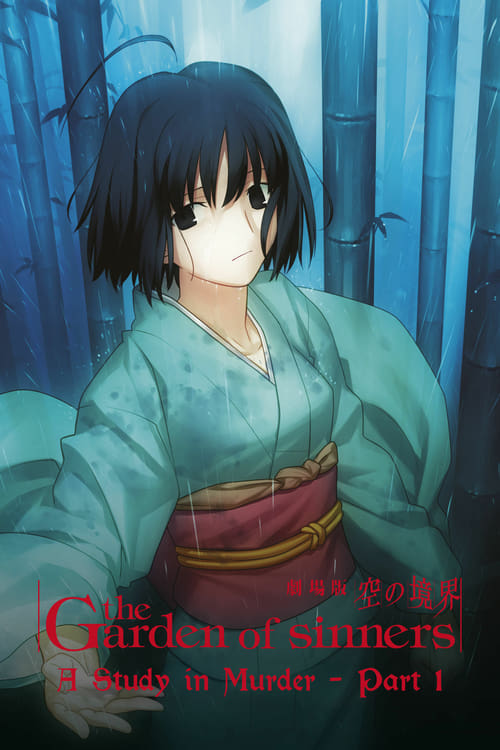
The Garden of Sinners: Murder Speculation Part A
Plot
August 1995: Mikiya first meets Shiki in a white kimono during a snowing day. Later on, at the high school freshmen ceremony, Mikiya sees Shiki in the crowd and chases after her, introducing himself to her. But Shiki hides a big secret: A wave of bizarre murders occur around many loose ends, and no suspects. there are still many questions: Who to believe? Who is the murderer? What is the secret of Shiki? and especially: Who is SHIKI?
Get the Weekly Woke Watchlist
New and trending movies scored for woke bias, preachy messaging, and forced political themes — before you waste your evening.
No spam. One useful email per week.
Overall Series Review
Categorical Breakdown
The movie is Japanese in origin, set in Japan, with entirely Japanese characters, and the narrative has no reference to race, Western cultures, 'whiteness,' or systemic oppression. Character value is defined by internal philosophical or supernatural concepts like 'emptiness' and 'truth,' aligning with a universal meritocracy of the soul.
The cultural critique is internal, focused on the rigid, traditional practices of Japanese magical families and the moral decay represented by the serial murders within the city. There is no hostility or self-hatred directed toward Western civilization, nor is there a framing of external cultures as morally superior to the West.
The protagonist, Shiki, is a lethal and formidable female with supernatural abilities. Her male counterpart, Mikiya, is a 'Ridiculously Average Guy,' but he is not depicted as incompetent or evil. Instead, his strength is his unwavering, gentle, and morally grounded dedication to her. This creates a complementary dynamic where Mikiya’s positive masculinity acts as the path for Shiki's desire for a 'normal life,' preventing a full 'Girl Boss' or male emasculation score.
The main character has a dual personality, explicitly described as having male ('SHIKI') and female ('Shiki') aspects, a result of a supernatural trait in her family line. This duality is a philosophical and psychological plot device (tied to concepts like the Taiji's Yin-Yang), not a lecture on modern gender ideology. The core romantic relationship is the traditional male-female pairing, and sexuality is not a central, politicized theme.
The story openly engages with, rather than rejects, transcendent moral and spiritual concepts, drawing inspiration from various religious philosophies like the nature of sin, duality, and reincarnation. While the narrative is dark and explores moral ambiguity, it acknowledges a struggle for an objective 'truth' and higher moral law rather than explicitly vilifying traditional religion or asserting moral relativism.
Get the Weekly Woke Watchlist
New and trending movies scored for woke bias, preachy messaging, and forced political themes — before you waste your evening.
No spam. One useful email per week.