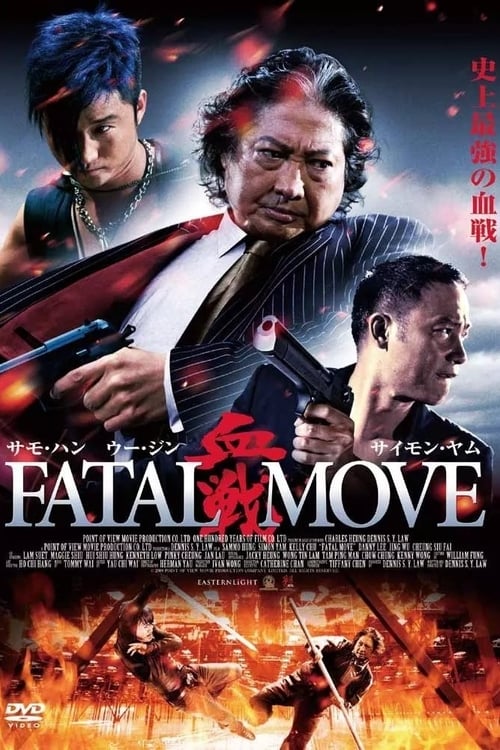
Triad Wars
Plot
In the midst of a violent gang war, a series of misfortunes threaten the fate of a gang boss and his mob.
Get the Weekly Woke Watchlist
New and trending movies scored for woke bias, preachy messaging, and forced political themes — before you waste your evening.
No spam. One useful email per week.
Overall Series Review
Categorical Breakdown
The movie is a Hong Kong production featuring an entirely Chinese/Asian cast, which is a culturally authentic reflection of the Triad subject matter. Character value is determined by loyalty, skill as a fighter, and position within the criminal hierarchy. There is no inclusion of 'diversity' or 'race-swapping,' nor any vilification of Western society or 'whiteness' as the source of oppression.
The narrative is a genre exercise within the Hong Kong crime tradition, depicting the violence and moral corruption of the Triad underworld. The focus is on the internal failure of the criminal 'family' and its code. It does not critique Chinese culture or demonize the national heritage; rather, it is a critique of a subculture of organized crime.
The main female character, Madame Soso (the boss's wife), is a powerful, calculated 'Lady Boss' figure who is a key conspirator and capable of extreme violence. Her motivation for betrayal is explicitly rooted in resentment toward the domestic family structure, specifically her bitterness over her inability to conceive and her husband fathering a child with his mistress. This framing positions a competent female character as anti-family and destructive, driven by an anti-natalist motive. Another female character, who blackmails the gang, is subjected to graphic torture and murder.
The core plot conflict revolves around the male-dominated Triad hierarchy, male-to-male criminal loyalties, and traditional male-female infidelity. There is no presence of alternative sexualities or gender theory discourse. The family structure, while dysfunctional and adulterous, maintains a normative male-female pairing as the standard against which Soso's bitterness is measured.
The film’s tone is bleak and amoral, with almost every character being a 'killer with no remorse' operating outside a conventional moral framework. The resulting moral vacuum is secular, driven by power and self-interest, but there is no explicit anti-theism or direct vilification of any traditional religion, especially Christianity. The film concludes with a maxim about 'destiny,' acknowledging a higher, non-subjective force at play.
Get the Weekly Woke Watchlist
New and trending movies scored for woke bias, preachy messaging, and forced political themes — before you waste your evening.
No spam. One useful email per week.