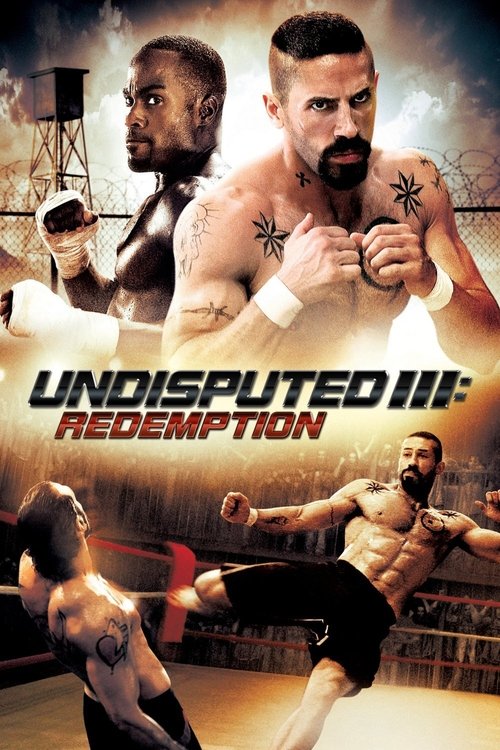
Undisputed III: Redemption
Plot
Russian inmate Boyka, now severely hobbled by the knee injury suffered at the end of Undisputed 2. No longer the feared prison fighter he was, he has declined so far that he is now good only for cleaning toilets. But when a new prison fight tournament begins - an international affair, matching the best fighters from prisons around the globe, enticing them with the promise of freedom for the winner - Boyka must reclaim his dignity and fight for his position in the tournament.
Get the Weekly Woke Watchlist
New and trending movies scored for woke bias, preachy messaging, and forced political themes — before you waste your evening.
No spam. One useful email per week.
Overall Series Review
Categorical Breakdown
Characters are universally judged by their fighting skill and moral code, exemplifying pure meritocracy. The central conflict is between the honorable fighter (Boyka) and the corrupt system/unfair opponent (Dolor and the organizers), not between identity groups. The lead, Boyka, is a white Eastern European, and his closest ally, Turbo, is an American Black man, who unite based on shared principles of honor against the system, completely ignoring race or intersectional hierarchy.
The film does not target Western civilization. The antagonists are the corrupt organizers and guards of a post-Soviet-bloc prison system, which represents a hostile, totalitarian-like corruption. The protagonist's fight is for 'freedom,' 'dignity,' and 'honor,' which are core Western ideals of liberty against chaos and tyranny. There is no civilizational self-hatred, but rather a fight *for* transcendent values.
Women are almost entirely absent from the narrative. The plot focuses exclusively on male themes of combat, honor, and brotherhood within a prison setting. The lack of female leads means there is no 'Girl Boss' trope, no emasculation of men, and no commentary on family or natalism. This places the score at the absolute lowest rating due to the complete absence of this ideological lens.
The movie contains no LGBTQ+ characters, themes, or ideological messaging of any kind. The focus is exclusively on the physical struggle of the male prisoners for survival and freedom, maintaining a completely normative structure with sexuality being private and non-central to the plot.
The main character, Boyka, frames his fighting ability as a divine gift and his pursuit of victory and honor as a form of spiritual service, exemplified by the film’s title, 'Redemption.' This narrative explicitly embraces a concept of transcendent morality and spiritual purpose (honor, redemption) rather than endorsing moral relativism or portraying faith as a source of evil.
Get the Weekly Woke Watchlist
New and trending movies scored for woke bias, preachy messaging, and forced political themes — before you waste your evening.
No spam. One useful email per week.