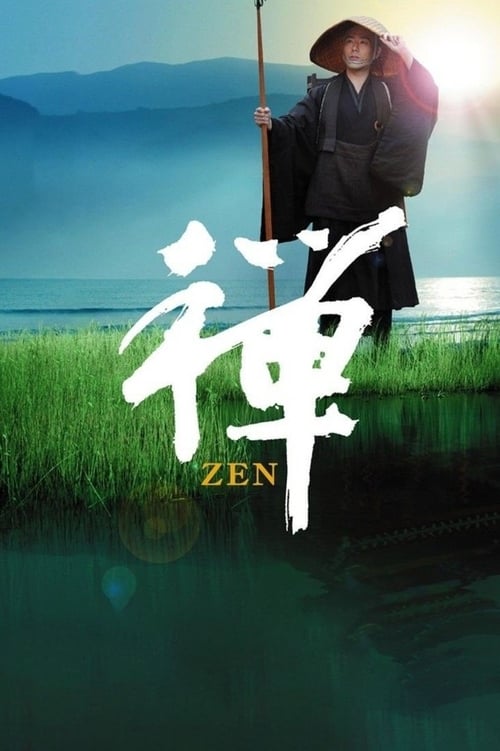
Zen
Plot
In the early 1200s, Dogen brought Chinese Zen philosophy to Japan, and established the Japanese Zen school of Buddhism. He taught that a person was capable of realizing Buddhahood within himself, by way of Zazen. Zazen is extended hours of sitting and meditating to achieve a state of “Mu” (nothingness, or empty existence).
Get the Weekly Woke Watchlist
New and trending movies scored for woke bias, preachy messaging, and forced political themes — before you waste your evening.
No spam. One useful email per week.
Overall Series Review
Categorical Breakdown
The film is a historical biopic set in 13th-century Japan/China. Characters are judged solely by their spiritual devotion and philosophical understanding. The conflict involves religious corruption and establishment resistance, not systemic oppression or intersectional hierarchy. Casting is historically and geographically authentic; there is no vilification of any immutable characteristic.
The narrative is centered on Japanese and Chinese history. It is not concerned with Western civilization, so hostility toward the West is absent. The critique is directed at the corrupt and materialistic *religious institutions* in Japan, with Dōgen striving to find a purer form of Buddhism in China and bring it back. This represents an internal, spiritual reformist impulse, not civilizational self-hatred of the 'home culture' in a modern political sense.
The score is low because the film is focused on a male religious master, but it is not a 1. The key female character, Orin, a prostitute, finds spiritual dignity through Dōgen's inclusive philosophy and becomes an aspiring nun. While this demonstrates spiritual equality, the narrative follows a traditional male monastic path. Dōgen resists her romantic advances, framing the monastic path as superior to carnal life, which is anti-sexual but not anti-natalist or 'Girl Boss' ideology. Men and women's roles are distinct within the spiritual hierarchy.
The film focuses on the traditional, monastic spiritual path of 13th-century Buddhism. The subject matter does not involve alternative sexualities, sexual identity as a core trait, or a deconstruction of the nuclear family. Sexuality is largely transcended or resisted for the sake of spiritual practice, aligning with a normative, pre-modern structure.
The film is a celebration of religious life and profound faith. The core message is the discovery and transmission of a transcendent spiritual and moral law (dharma). Dōgen's Zen philosophy is framed as the ultimate source of strength and objective truth. The conflict is between authentic faith and corrupt religious *institutions*, the opposite of hostility toward religion itself.
Get the Weekly Woke Watchlist
New and trending movies scored for woke bias, preachy messaging, and forced political themes — before you waste your evening.
No spam. One useful email per week.