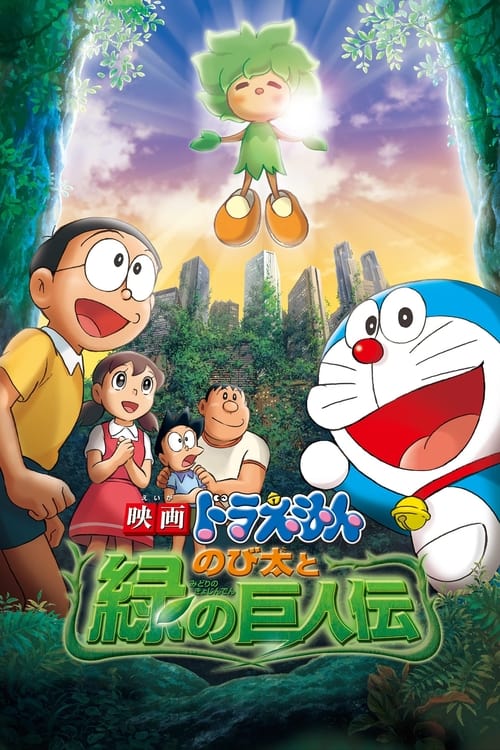
Doraemon: Nobita and the Green Giant Legend
Plot
Nobita’s troubled about what to do with his zero test marks once again. A gust of wind scatters his test papers and he falls into a garbage dump trying to gather them together again. There he finds a young withered tree that caught one of his papers and he decides to take it home. He tries to plant it in his garden but gets caught by his mother who doesn’t allow him to grow it.
Get the Weekly Woke Watchlist
New and trending movies scored for woke bias, preachy messaging, and forced political themes — before you waste your evening.
No spam. One useful email per week.
Overall Series Review
Categorical Breakdown
The plot focuses on a species-level conflict (humanity vs. plant-aliens) based on environmental destruction, not an intersectional hierarchy of human race or immutable characteristics. Character merit, specifically Nobita's emotional bond with Kibō, is the central mechanism for resolving the crisis. Casting is historically authentic to the source material and Japanese setting.
Aliens from the Planet of Green decide to pass judgment on humanity, claiming humans are destroying all the green on Earth, which leads to their plan to annihilate all non-plant life. This directly frames the 'home culture' (humanity/Earth civilization) as fundamentally corrupt and deserving of destruction by a seemingly spiritually superior, 'noble savage' alien culture, scoring high. However, the Elder and the moral core of the film oppose this destructive alien plan, preventing a maximum score.
Shizuka is one of the main child heroes, but the central action belongs to Nobita and Doraemon. Princess Lire is a young leader of the alien world, representing a 'Girl Boss' element, but her aggressive plan is instigated by a male advisor and ultimately shown to be misguided. Masculinity and femininity are largely complementary within the core group, and the adoption of Kibō reinforces the family unit as a positive institution.
The narrative adheres to a normative structure, centering on the main characters' existing male-female and familial relationships, such as Nobita's parents accepting Kibō into their home. There is no presence or focus on alternative sexualities, gender ideology, or deconstruction of the nuclear family.
The conflict is centered on environmental ethics and the moral responsibility of humanity to nature, culminating in a message of objective truth about life's interconnectedness, symbolized by the Elder's ultimate sacrifice. The narrative displays no hostility toward traditional religion, and no religious characters are portrayed as villains or bigots.
Get the Weekly Woke Watchlist
New and trending movies scored for woke bias, preachy messaging, and forced political themes — before you waste your evening.
No spam. One useful email per week.