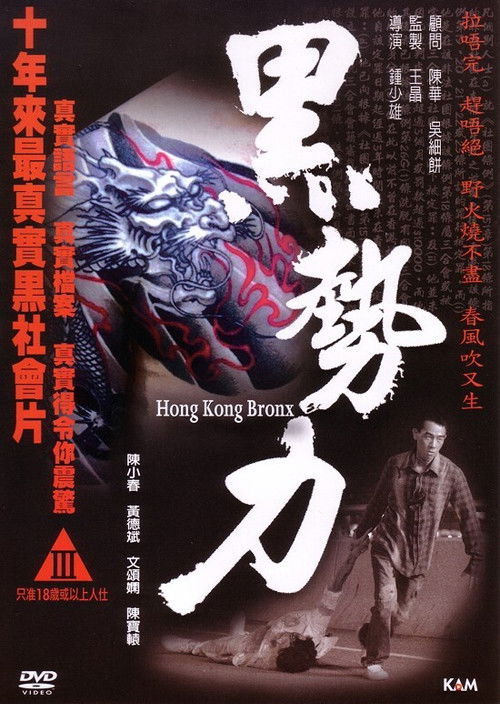
Hong Kong Bronx
Plot
A former triad fresh from a prison term, decides to go straight, but finds himself up against a rival gangster.
Get the Weekly Woke Watchlist
New and trending movies scored for woke bias, preachy messaging, and forced political themes — before you waste your evening.
No spam. One useful email per week.
Overall Series Review
Categorical Breakdown
Characters are judged exclusively by their personal honor, criminal actions, and dedication to family, which is the definition of meritocracy in a crime drama. The film is a Hong Kong production with an ethnically authentic cast, and there is no discussion of race, intersectionality, or the vilification of 'whiteness.'
The protagonist's main goal is to protect his home, his sisters, and his desire for a straight life within his own society. The narrative holds up the value of family and honor against the chaos of the gang life. The conflict is internal to the Hong Kong criminal underworld, not a critique that the home culture is fundamentally corrupt or inferior to an outside civilization.
Gender roles are traditional, with the male protagonist's central motivation being protective masculinity—specifically, his desire to be a good role model and guardian for his two sisters. Women are not depicted as 'Mary Sues,' and the narrative is focused on male-centric Triad power struggles and physical action. Motherhood or family is not demonized in favor of a careerist 'Girl Boss' trope.
The movie is a standard 2008 Triad drama that does not feature alternative sexualities, gender ideology, or deconstruction of the nuclear family. The romantic subplots and familial structures are normative, with sexuality remaining a private matter and not a centerpiece of the narrative or a tool for social lecturing.
The conflict is secular, dealing with morality as personal honor and righteous conduct versus amoral gang violence and drug trafficking. There is no mention of religion (Christianity or otherwise) or religious characters; therefore, no anti-theistic messaging or lecturing on moral relativism is present. The morality on display is objective: protecting family is good; harming civilians is evil.
Get the Weekly Woke Watchlist
New and trending movies scored for woke bias, preachy messaging, and forced political themes — before you waste your evening.
No spam. One useful email per week.