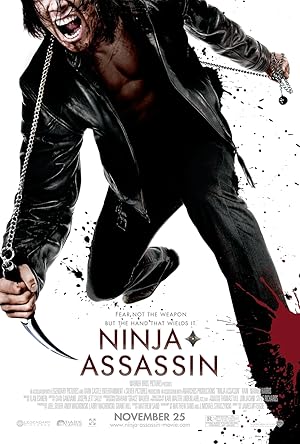
Ninja Assassin
Plot
Trained since childhood to be a lethal killer, Raizo has since turned his back on the Ozunu clan that raised him and now seeks revenge for their heartless murders. Teaming up with Europol investigator Mika, Raizo steadily butchers his enemies while inching ever closer to the long-awaited bloody reunion with his former master.
Get the Weekly Woke Watchlist
New and trending movies scored for woke bias, preachy messaging, and forced political themes — before you waste your evening.
No spam. One useful email per week.
Overall Series Review
Categorical Breakdown
The hero is an Asian male, and his antagonist is also an Asian male, rooting the conflict in personal moral betrayal rather than immutable characteristics. The co-lead is a Black female Europol agent, but her race is not a plot factor. Characters are defined by their skill and moral choices. The presence of a competent Black female lead alongside an Asian male lead in a major action film operates under a genuinely colorblind casting model.
The conflict is Raizo's rejection of a specific, ancient, East Asian-based nihilistic assassin clan, which he views as a corrupt and evil institution. This is not a generalized vilification of Western civilization or the ancestral home; instead, a Western law enforcement agency (Europol) is shown to be investigating the clan's global criminal activities.
Europol Agent Mika Coretti is a determined and competent professional who drives the investigation and defies her male superior, placing her slightly on the 'Girl Boss' spectrum. However, she is a complementary character to the male protagonist, Raizo, who is clearly the hyper-lethal warrior and primary protector. The men are predominantly highly capable or deadly, not bumbling or incompetent.
The narrative is entirely dedicated to a revenge plot and martial arts action. There is no introduction of sexual identity as a theme, no focus on alternative sexualities, and no messaging that deconstructs the traditional family unit. Sexuality remains a private non-factor in the story.
The Ozunu Clan operates under a brutal, ancient system of power, but it is a criminal and mercenary organization, not a traditional religious body. The film's moral vacuum is created by this specific clan's nihilism and greed. There is no vilification or mention of Christianity or other major organized religions; the core morality is simply a battle between Raizo's humanity and his master's cruelty.
Get the Weekly Woke Watchlist
New and trending movies scored for woke bias, preachy messaging, and forced political themes — before you waste your evening.
No spam. One useful email per week.