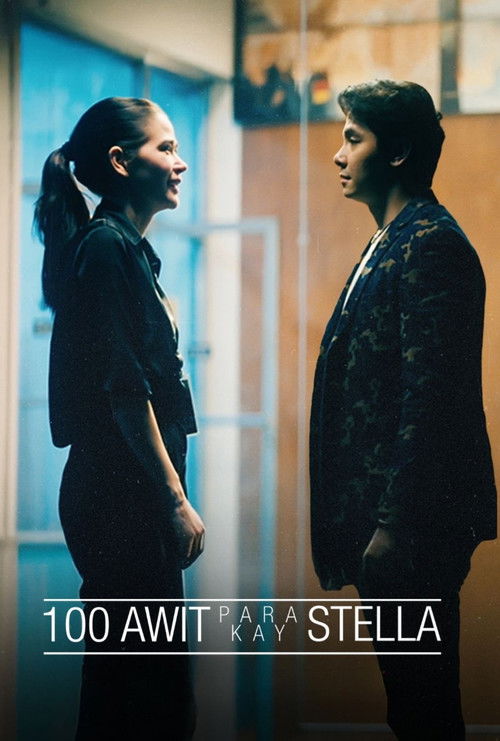
100 Songs for Stella
Plot
Stella, now a successful singles event organizer, crosses paths with Fidel after 15 years. Recently separated and emotionally guarded, she finds herself reconnecting with her past love, now retreating from the corporate world due to personal struggles. When rising star Clyde enters the picture, feelings resurface andoldwounds reopen. Will Stella and Fidel finally find the timing they once missed?
Get the Weekly Woke Watchlist
New and trending movies scored for woke bias, preachy messaging, and forced political themes — before you waste your evening.
No spam. One useful email per week.
Overall Series Review
Categorical Breakdown
The casting is historically and culturally authentic to a Filipino production, focusing on universal themes of love, personal struggles, and artistic merit. Character conflict stems from emotional hang-ups, past abuse, and professional challenges. There is no focus on intersectional hierarchy, racial grievances, or vilification of whiteness.
The movie operates within a local, Filipino context, concerning itself with the emotional and professional lives of its main characters. There is no indication of hostility toward the characters' home culture, national heritage, or ancestors. The institutions and settings, such as family (even if strained) and local associations (stuttering support group), serve as a backdrop for personal, merit-based growth and healing.
Stella is presented as a successful CEO of her own events company, which aligns with the 'Girl Boss' trope. However, her character is complex, being described as a 'textbook avoidant' and a 'narcissist' who is a victim of domestic abuse, which tempers the 'perfect' female lead concept. The male lead, Fidel, is a vulnerable, artistic character who must overcome a speech impediment and co-dependency, and the ex-husband is portrayed as a clear villain due to his abusive nature. The plot centers on Stella's liberation from an abusive male and her pursuit of self-fulfillment, but it avoids overtly anti-natalist messaging, grounding her singleness in past trauma (the death of her baby) rather than a political rejection of family.
The core of the story is an emotionally complex, long-standing heterosexual love story and triangle. Stella runs a company for singles, implying traditional pairing is the focus. There are no plot points centering alternative sexualities, deconstructing the nuclear family as a concept, or promoting gender ideology. Sexuality is treated as a private matter of the adult characters' romantic past and present.
The movie's moral philosophy is secular, revolving around self-acceptance, emotional healing, and finding one's 'own way,' which is a form of subjective moral focus. However, the plot contains no explicit hostility toward religion, specifically Christianity, nor are religious characters portrayed as bigots or villains. The conflict and resolution are entirely psychological and emotional, not theological.
Get the Weekly Woke Watchlist
New and trending movies scored for woke bias, preachy messaging, and forced political themes — before you waste your evening.
No spam. One useful email per week.