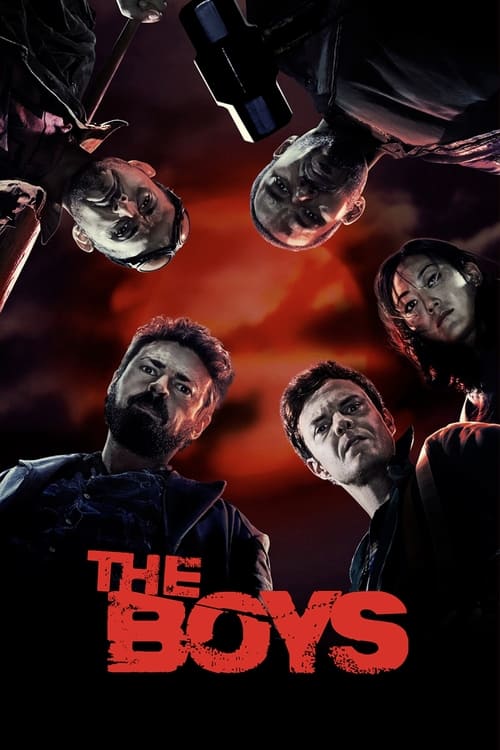
The Boys
Season 1 Analysis
Season Overview
Superpowered individuals are recognized as superheroes, but in reality, abuse their powers for personal gain, information the public is kept unaware of.
Season Review
Categorical Breakdown
The narrative explicitly frames the central conflict as a struggle against a power structure (Vought/The Seven) that is overwhelmingly white and male, embodying corporate corruption, fascism, and toxic behavior. The primary villains are the quintessential white male heroes. Black characters, such as A-Train and Black Noir, are subjected to a narrative focused on systemic racism, suffering, and exploitation within the corporate system. The core conflict relies on exposing the privilege and wickedness of the powerful 'supe' class, often correlating their whiteness and maleness with their villainy.
The series delivers a total and unyielding condemnation of major American institutions, framing them as fundamentally rotten. The military, the government, corporate capitalism, celebrity culture, and the very idea of the American hero are depicted as utterly corrupt, cynical, and self-serving, controlled by the evil Vought International. The show constantly deconstructs national myths, presenting the home culture as being built on a toxic foundation of lies, profit-motive, and manufactured crisis.
Gender dynamics are centered in a major storyline, focusing on Starlight’s struggle against sexual assault and corporate misogyny, a direct allegory for the Me Too movement. The male supes are portrayed as sexual predators, toxic, or bumbling idiots, while Starlight and Kimiko (The Female) are core moral and physical forces against Vought. The narrative does not lean into 'Girl Boss' perfection, as Starlight is shown to be naive and flawed, but the overall message is a clear indictment of toxic masculinity and the systems that enable it.
The character Queen Maeve is introduced as a bisexual woman whose authentic identity is immediately seized upon and tokenized by Vought’s public relations team, which tries to erase her bisexuality to brand her as a more easily marketable 'lesbian' symbol. The narrative critiques the corporate commodification of sexual identity. Male homosexual activity and non-binary/gender-fluid representation (Doppelganger) are often portrayed through dark satire, as either jokes, villainy, or depravity, which while a critique of media tropes, still centers alternative sexualities in a cynical light.
Organized religion, specifically American Christianity/Evangelicalism, is explicitly targeted for critique and mockery. The megacorporation Vought openly co-opts Christian faith and imagery to market their 'Supes' as God-given saviors, demonstrating how faith is leveraged for profit and political power. Starlight, a sincerely religious character at the start, loses her faith as she is exposed to the corruption of the world and her 'heroes.' The main protagonist, Billy Butcher, frequently expresses outright hostility towards the concept of God, viewing him as a mass murderer and the source of all the world's chaos.