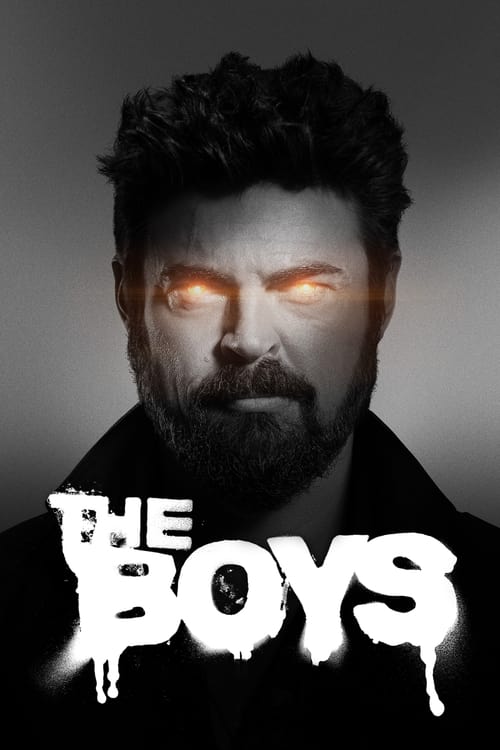
The Boys
Season 3 Analysis
Season Overview
It’s been a year of calm. Homelander’s subdued. Butcher works for the government, supervised by Hughie of all people. But both men itch to turn this peace and quiet into blood and bone. So when The Boys learn of a mysterious Anti-Supe weapon, it sends them crashing into the Seven, starting a war, and chasing the legend of the first Superhero: Soldier Boy.
Season Review
Categorical Breakdown
The narrative uses race and identity as a primary lens for plot and character analysis. Homelander's storyline culminates in him becoming a figurehead for a politically charged, anti-'woke' movement, explicitly linking villainy with far-right conservative identity. The show introduces Blue Hawk, a supe who embodies police brutality and racism in minority neighborhoods. Privilege and systemic oppression are central themes, and white male characters who represent traditional archetypes (Soldier Boy, Homelander) are universally depicted as psychopathic, destructive, and incompetent outside of their raw power.
The central story of the season revolves around the resurrection of Soldier Boy, a hero from the World War II era who is explicitly presented as the embodiment of an American past that is toxic, misogynistic, and racist. The character's existence serves to deconstruct and demonize traditional American heroism and the sacrifices of ancestors. The message is simple: the perceived 'good old days' were fundamentally rotten, and the traditional concept of masculinity tied to that era is a destructive force.
The showrunner described the season as a 'meditation on toxic masculinity.' Male leads like Homelander, Soldier Boy, and even Butcher demonstrate destructive, selfish, and violent behavior rooted in hyper-masculinity. Female characters like Starlight and Queen Maeve are consistently portrayed as the moral, competent, and often physically stronger or more emotionally intelligent opposition to the corrupt, male-dominated systems of Vought and The Seven. The female characters drive the plot toward positive change, while the men are generally the source of chaos and corruption.
The season contains an explicit focus on LGBTQ+ themes and characters. Queen Maeve's sexuality is weaponized by Vought for cynical corporate 'rainbow capitalism' PR, which satirizes the phenomenon but still centers the identity for plot. Frenchie's personal life includes a revelation of his bisexuality and a male love interest, which shifts his romantic plotline. Alternative sexualities and identities are promoted as a means to dismantle the oppressive, heteronormative structure of The Seven.
Characters who explicitly reference or are associated with traditional religion and faith, such as the Christian supe The Deep, are consistently portrayed as degenerate, hypocritical, and morally bankrupt. The narrative links 'God and patriotism' directly to the followers and public image of the villainous Homelander, positioning traditional faith as a mask for depravity and a component of political extremism. The show operates from a purely subjective moral framework where power dynamics dictate right and wrong.