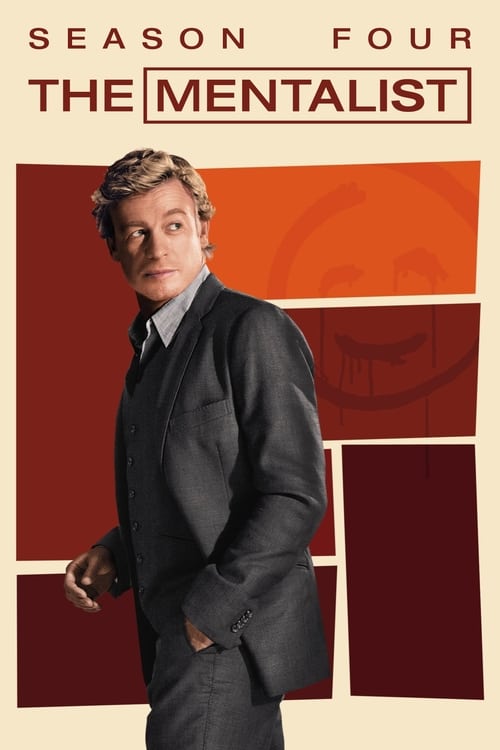
The Mentalist
Season 4 Analysis
Season Overview
Patrick Jane was arrested for the public murder of the man he believes is the notorious serial killer Red John, who murdered his wife and daughter. Unless, of course, the man Patrick shot is someone else. With an upstart new boss, puzzling new cases, and Red John never far from his mind, the unconventional Patrick will need all his razor-sharp skills of observation, manipulative theatrics and smooth charm to sidestep the system that stands in the way of the truth.
Season Review
Categorical Breakdown
The CBI team's performance and character arcs are driven entirely by competence, personal loyalty, and individual drama, which aligns with a universal meritocracy perspective. Casting is colorblind without political commentary. The narrative does not utilize an intersectional lens; a character like Agent Cho, who is Asian-American, has his story arc centered on his professional role and his relationship with a former prostitute/informant, not his race.
The narrative does not engage in civilizational self-hatred. The show's critique is focused on the corruption and incompetence within specific bureaucratic institutions (CBI, FBI) and individual bad actors within the justice system, which is a common trope in police procedurals. Lisbon and the team consistently fight for justice, showing an underlying respect for the institution's purpose, even if it is flawed. There is no deconstruction of Western heritage.
Female characters are competent and hold positions of authority (Lisbon as the team leader), but they are not 'Mary Sues' and have clear flaws and personal struggles. Lisbon struggles to manage Jane, and Van Pelt deals with the fallout of an unplanned pregnancy subplot where the mother rejects Rigsby's proposal, which lightly touches on an anti-natalist outcome by prioritizing an independent path over forming a nuclear family. Males like Rigsby and the new boss Wainwright are not overtly emasculated, though Jane, the anti-hero, consistently outsmarts most authority figures, both male and female.
The season maintains a normative structure. All primary romantic and sexual dynamics introduced—Jane's entanglement with Lorelai Martins, Cho's relationship with Summer Edgecombe, and the Rigsby/Van Pelt/baby-mother drama—are heterosexual pairings. The narrative does not focus on alternative sexualities, deconstruct the nuclear family as a societal institution, or engage with gender ideology.
Patrick Jane is an unwavering skeptic and atheist who consistently and aggressively exposes all forms of faith and spirituality, including his primary arc exposing the Visualize cult leader Bret Stiles. He explicitly articulates a position of moral relativism, stating, 'there's no such thing as right or wrong,' a line later quoted by the villainous Red John disciple Lorelai Martins to encourage Jane to embrace amorality. The serial killer Red John is even characterized as a 'dead god' with cult-like followers who commit suicide praising him, directly framing faith as a path to evil.