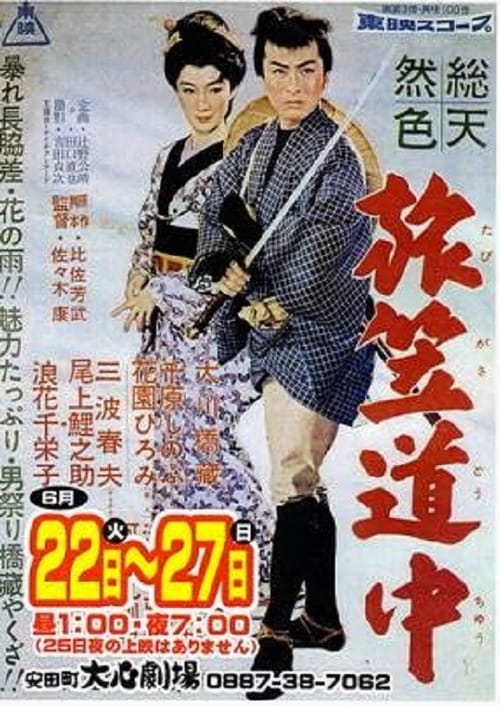
Her Son Came Back
Plot
Kind hearted yakuza Hanjiro of Asama risks his life in saving his henchman Genjiro and his family.
Get the Weekly Woke Watchlist
New and trending movies scored for woke bias, preachy messaging, and forced political themes — before you waste your evening.
No spam. One useful email per week.
Overall Series Review
Categorical Breakdown
The plot centers on an honorable outlaw judged entirely by his actions, loyalty, and moral code, not by any immutable characteristic. The film is set in Japan and does not engage with race-based political lectures or the vilification of 'whiteness.'
The film is a traditional Japanese period drama (*jidaigeki*) that explores and often affirms a local cultural code of honor and duty, the *ninkyo* tradition. There is no hostility or civilizational self-hatred toward its own culture or Western civilization.
The core plot is about the self-sacrificial protective actions of the male lead, Hanjiro, to save his henchman's family. This narrative reinforces a traditional, protective view of masculinity and celebrates the importance of the family unit, demonstrating clear complementarianism.
The narrative is focused on yakuza loyalty and the protection of a henchman's traditional family structure. The film, a 1958 period drama, adheres to a normative structure without centering alternative sexualities, deconstructing the nuclear family, or lecturing on gender theory.
The film's morality is rooted in the high moral code of *giri* (duty) and *ninjo* (human feeling/compassion) that defines the chivalrous yakuza. Hanjiro’s willingness to risk his life for others acts as a transcendent moral law, affirming objective virtue over self-interest.
Get the Weekly Woke Watchlist
New and trending movies scored for woke bias, preachy messaging, and forced political themes — before you waste your evening.
No spam. One useful email per week.