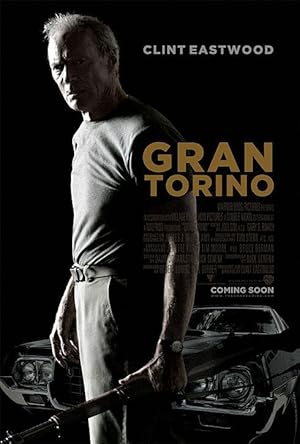
Gran Torino
Plot
Walt Kowalski (Clint Eastwood) is a widower who holds onto his prejudices despite the changes in his Michigan neighborhood and the world around him. Kowalski is a grumpy, tough-minded, unhappy old man who can't get along with either his kids or his neighbors. He is a Korean War veteran whose prize possession is a 1972 Gran Torino he keeps in mint condition. When his neighbor Thao Lor (Bee Vang), a young Hmong teenager under pressure from his gang member cousin, tries to steal his Gran Torino, Kowalski sets out to reform the youth. Drawn against his will into the life of Thao's family, Kowalski is soon taking steps to protect them from the gangs that infest their neighborhood.
Get the Weekly Woke Watchlist
New and trending movies scored for woke bias, preachy messaging, and forced political themes — before you waste your evening.
No spam. One useful email per week.
Overall Series Review
Categorical Breakdown
The narrative explicitly rejects intersectional hierarchies by focusing on individual character. Walt uses harsh language, but the story shows him forming bonds based on shared values like work ethic and respect rather than racial grouping. The white protagonist remains the moral center and hero of the film.
The film champions the American veteran and the blue-collar history of the Midwest. While it critiques the greed and apathy of Walt’s biological children, it does so to uphold traditional standards of family and duty rather than to demonize Western culture.
Masculinity is portrayed as a necessary and protective force. The movie focuses on the 'making of a man' through discipline and labor. Female characters are presented within the context of their families and communities without any 'girl boss' tropes or the emasculation of male leads.
The movie adheres to a strictly normative worldview. There is no inclusion of queer theory, gender ideology, or alternative lifestyle promotion. The focus remains entirely on traditional neighborhood and family dynamics.
Despite the protagonist's initial gruffness toward a young priest, the film treats the clergy with increasing respect. The climax of the film is a deliberate act of Christ-like sacrifice, framing religious themes of atonement and redemption as the ultimate solution to social chaos.
Get the Weekly Woke Watchlist
New and trending movies scored for woke bias, preachy messaging, and forced political themes — before you waste your evening.
No spam. One useful email per week.