HouHou
Plot
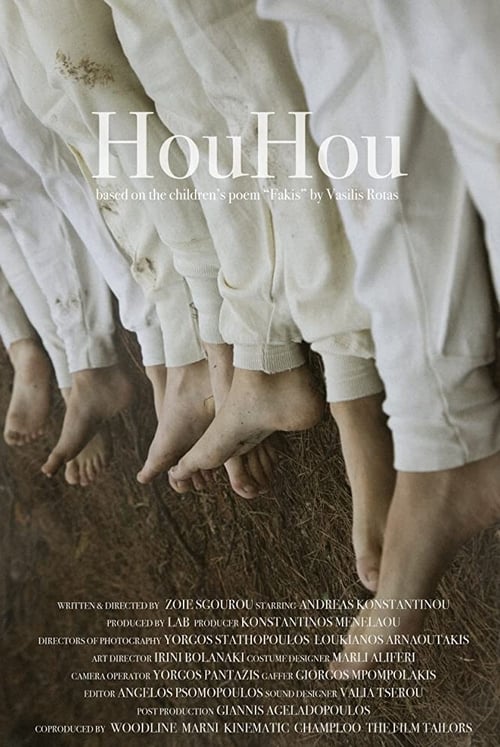
Houhou is the visualization of an anti war Greek children's poem. The film explores the thin line between duty and crime, heroism and fearfulness, past and present by diving deep into a soldier's mind.
Get the Weekly Woke Watchlist
New and trending movies scored for woke bias, preachy messaging, and forced political themes — before you waste your evening.
No spam. One useful email per week.
Overall Series Review
Categorical Breakdown
The narrative focuses exclusively on the soldier’s individual mind and the universal questions of duty, crime, heroism, and fear. Character merit is judged by the content of the soul and the internal moral struggle; race, immutable characteristics, and intersectional hierarchy are not a factor in the conflict.
The film’s anti-war stance questions the nature of 'duty' and 'crime' in a conflict zone, which is a specific critique of militarism and war actions. This is not generalized civilizational self-hatred, but a moral challenge to violence. The film's source is a Greek poem, meaning the critique is directed at the act of war, not a demonization of the core institutions of its home culture (Greece).
The plot centers on a 'soldier's mind' and the masculine-coded concepts of duty and heroism. There is no presence of 'Girl Boss' tropes, emasculation, or discussion of anti-natalism. Gender roles are not a part of the central conflict, and the focus remains on the soldier's internal moral dilemma.
The core themes are anti-war, morality, and psychology. There is no indication of centering alternative sexualities, deconstructing the nuclear family, or lecturing on gender ideology. The focus is on a soldier’s internal battle.
The exploration of 'duty and crime' and 'heroism and fearfulness' inherently deals with objective moral questions. While not explicitly religious, the search for a definitive 'crime' suggests an acknowledgement of objective moral law rather than a wholesale embrace of moral relativism or hostility toward religion.
Get the Weekly Woke Watchlist
New and trending movies scored for woke bias, preachy messaging, and forced political themes — before you waste your evening.
No spam. One useful email per week.