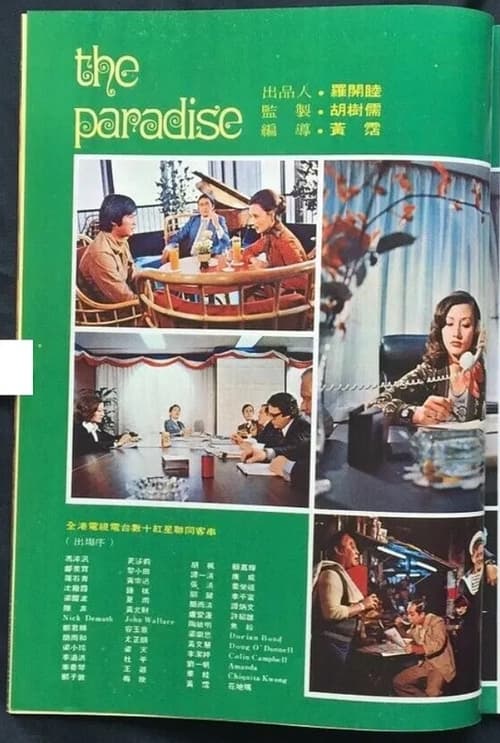
The Paradise
Plot
1974 Drama by James Wong Jim
Get the Weekly Woke Watchlist
New and trending movies scored for woke bias, preachy messaging, and forced political themes — before you waste your evening.
No spam. One useful email per week.
Overall Series Review
Categorical Breakdown
The film is a Chinese-language Hong Kong production with a fully Chinese cast, and its social critique is centered on the local society. The plot addresses universal themes of greed and social phenomena, not Western-based discussions of race, intersectional hierarchy, or the vilification of whiteness. Characters are judged by their moral character and professional actions within the film's satirical context. Universal Meritocracy prevails as the standard.
The film satirizes the 'bizarre phenomena' of Hong Kong society, a critique directed at local social conditions and corruption. This criticism of specific, local societal failures does not equate to the definition of civilizational self-hatred, which focuses on hostility toward Western civilization, one's own home, or ancestors. The film engages in social self-reflection, not oikophobia.
As a mainstream film from 1974, the narrative is not structured around modern 'Girl Boss' or anti-natalist tropes. While female characters, such as lead actress Hu Yan-ni, exhibit agency in the drama, gender dynamics are rooted in traditional or contemporary social norms of the time. There is no evidence of the emasculation of males or a message framing motherhood as a prison.
The film is a 1974 Hong Kong social satire and drama. The plot and themes do not focus on sexual identity, the deconstruction of the nuclear family, or gender ideology. This content is entirely absent and anachronistic for the film’s genre, time period, and cultural context. The structure maintains a normative male-female pairing as the standard for romance and family dynamics.
The core of the film is a secular social critique and satire of society's ills and corruption. The narrative's focus on material or social morality is a critique of behavior, not a wholesale attack on religion, specifically Christianity, or the concept of a higher moral law. The film acknowledges Objective Truth through its critique of societal immorality.
Get the Weekly Woke Watchlist
New and trending movies scored for woke bias, preachy messaging, and forced political themes — before you waste your evening.
No spam. One useful email per week.