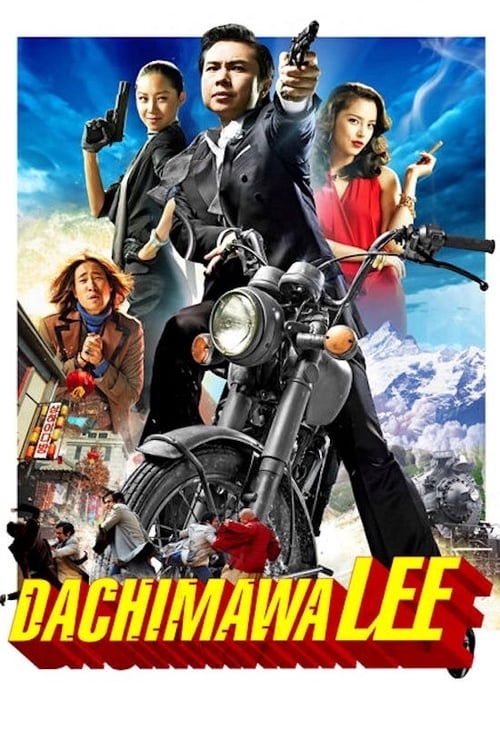
Dachimawa Lee
Plot
Under Japanese imperialism, Korean national treasure Golden Buddha is stolen. More important to national security, the statue contains vital information concerning Korean freedom fighters and their whereabouts as well as their true identities. The interim Korean government appoints legendary Korean spy Agent Dachimawa Lee to recover the fabled statue and reveal the dark plot behind the theft.
Get the Weekly Woke Watchlist
New and trending movies scored for woke bias, preachy messaging, and forced political themes — before you waste your evening.
No spam. One useful email per week.
Overall Series Review
Categorical Breakdown
The conflict is built on a clear, non-intersectional, national basis: Korean freedom fighters (heroes) vs. Japanese imperialists (villains). The plot centers on character merit and loyalty to the nation rather than a complex hierarchy of immutable characteristics. Antagonists are defined by their actions as oppressors in a historical context, not by systemic privilege or race as a modern lecture would frame it. The protagonist is judged by his skill and patriotism.
The film's entire premise is the defense and liberation of the home culture and nation, Korea, from foreign imperial rule. The hero is a national icon fighting to protect a national treasure and the country's freedom fighters. The core narrative is a clear affirmation of national identity and sovereignty, directly opposing the concept of civilizational self-hatred. There is clear respect for the sacrifices of ancestors who fought for Korean independence.
The hero is a highly capable male spy, Dachimawa Lee, who is central to the plot. While a female agent is involved, the overall genre is a spy spoof that appears to feature conventional gender roles, with women occasionally portrayed in a manner consistent with classic femme fatale tropes. One review mentions a female agent being saved by a silicone implant, which is a comedic and objectifying element. However, the film avoids the 'Mary Sue' and explicit anti-natalist messages of modern feminism, instead featuring a traditional male-centric action hero narrative.
There is no evidence of the inclusion of alternative sexualities, gender ideology, or a critique of the nuclear family structure. The narrative is focused entirely on a mission of national security and genre parody. Sexual identity is private and not a centered theme or political point of the plot.
The main plot device is the Golden Buddha, a religious and cultural artifact, but its value in the film is purely as a container for vital national security information. The film is a secular action-comedy focused on espionage and patriotism. There is no hostility directed toward any traditional religion, nor does the film lecture on moral relativism. The hero fights for justice, aligning with objective moral good.
Get the Weekly Woke Watchlist
New and trending movies scored for woke bias, preachy messaging, and forced political themes — before you waste your evening.
No spam. One useful email per week.