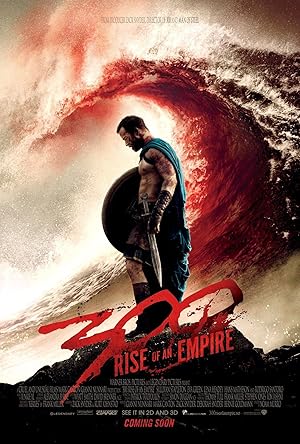
300: Rise of an Empire
Plot
After its victory over Leonidas' 300, the Persian Army under the command of Xerxes marches towards the major Greek city-states. The Democratic city of Athens, first on the path of Xerxes' army, bases its strength on its fleet, led by admiral Themistocles. Themistocles is forced to an unwilling alliance with the traditional rival of Athens, oligarchic Sparta whose might lies with its superior infantry troops. But Xerxes still reigns supreme in numbers over sea and land.
Get the Weekly Woke Watchlist
New and trending movies scored for woke bias, preachy messaging, and forced political themes — before you waste your evening.
No spam. One useful email per week.
Overall Series Review
Categorical Breakdown
The film focuses on the collective identity of the Greeks as defenders of freedom. It does not engage in race-swapping or the vilification of characters based on modern racial hierarchies. The conflict is depicted as a struggle between political systems rather than a commentary on systemic oppression.
The narrative is an unapologetic defense of the West. It portrays Greek democracy and the Athenian way of life as superior to Persian autocracy. The story honors the sacrifices of ancestors and views the defense of the homeland as the highest moral calling.
Artemisia is portrayed as a hyper-competent naval commander who is more capable, ruthless, and tactically skilled than any of the men around her. She embodies the 'Girl Boss' trope, often overshadowing the male protagonist, Themistocles. However, the presence of Queen Gorgo balances this by showing a strong female leader rooted in her culture and family legacy.
The movie adheres to traditional depictions of men and women. There is no inclusion of gender theory or alternative sexual identities as political statements. The aesthetic remains hyper-masculine, focusing on brotherhood and martial prowess without deconstructing the nuclear family.
The plot frames the 'God-King' status of Xerxes as a deceptive and tyrannical construct. While it rejects the idea of a man as a god, it does not attack the concept of objective truth or the spiritual foundations of Greek culture. The focus is on human reason and freedom rather than a critique of religion itself.
Get the Weekly Woke Watchlist
New and trending movies scored for woke bias, preachy messaging, and forced political themes — before you waste your evening.
No spam. One useful email per week.