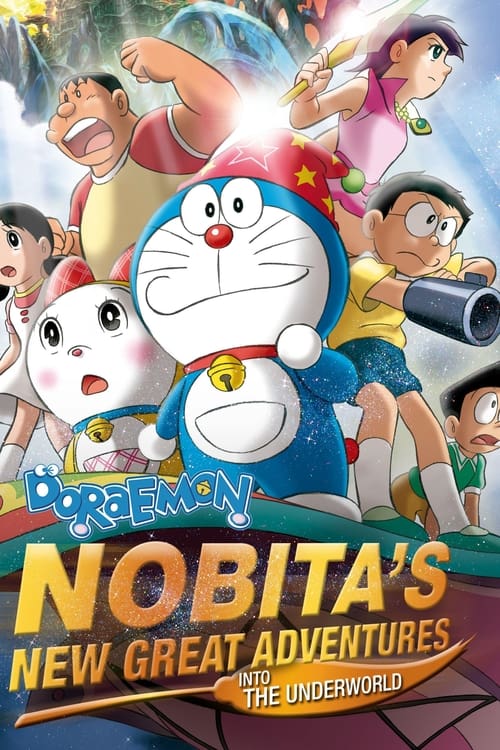
Doraemon: Nobita's New Great Adventure Into the Underworld - The Seven Magic Users
Plot
When Nobita turned the world into a world with magic with the what-if-telephone-booth-gadget, He and his world needed to defeat the threat that became reality in this world.
Get the Weekly Woke Watchlist
New and trending movies scored for woke bias, preachy messaging, and forced political themes — before you waste your evening.
No spam. One useful email per week.
Overall Series Review
Categorical Breakdown
The plot centers on a universal conflict against an external demonic threat. Characters are defined purely by their courage, competence, and willingness to help, not by immutable characteristics, race, or social hierarchy. The casting is ethnically consistent with the source material, and no themes of systemic oppression or 'whiteness' vilification are present. Character merit is the only metric for heroism.
Nobita's initial wish to escape his reality into a magic world suggests a mild dissatisfaction with his own home and the world of science. However, this is immediately countered by the narrative, which shows the magic world is equally difficult and introduces a catastrophic, external threat. The ultimate goal is to save the world (their 'home') from destruction, which frames the home as something valuable and worth fighting for. It does not demonize ancestors or home culture.
The core female characters, Shizuka and the new character Miyoko, are active participants in the adventure and powerful magic users. Miyoko is a pivotal figure and an equal in the quest. The villain's lieutenant, Medusa, is a complex female character with significant development. However, the female characters act in complementary roles alongside the male heroes (Nobita, Doraemon, Gian, Suneo), and Nobita himself is the main protagonist whose actions ultimately decide the final confrontation. The themes do not push an anti-natalist or 'Motherhood is a prison' message; Miyoko's mother's past is a key plot point related to family and sacrifice.
The movie contains no focus on sexual identity, alternative sexualities, or gender theory. The social and familial structure presented is entirely normative and traditional, consistent with the source material of a classic children's franchise. The nuclear family unit, though secondary to the adventure, is implicitly the standard structure.
The central conflict is a battle against the Demon Lord Demaon and his army from a demonic planet. This is a clear representation of objective, transcendent evil, with the main villain's design overtly inspired by Satan. The narrative is one of a fight for transcendent good against this objective evil, directly contradicting moral relativism. The use of 'demonic' and 'underworld' imagery reinforces a moral framework of light versus darkness, rather than vilifying traditional religion.
Get the Weekly Woke Watchlist
New and trending movies scored for woke bias, preachy messaging, and forced political themes — before you waste your evening.
No spam. One useful email per week.