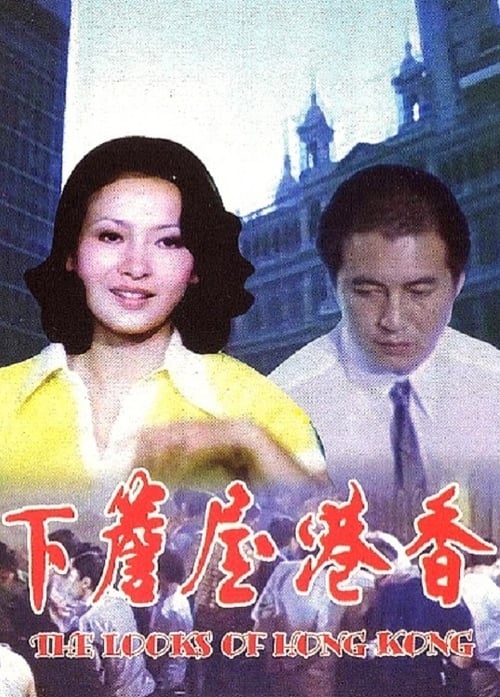
The Looks of Hong Kong
Plot
The Looks of Hong Kong is a Hong Kong Drama directed by and starring Stanley Fung.
Get the Weekly Woke Watchlist
New and trending movies scored for woke bias, preachy messaging, and forced political themes — before you waste your evening.
No spam. One useful email per week.
Overall Series Review
Categorical Breakdown
The movie is a 1974 Hong Kong-based production featuring an authentic all-East Asian cast and setting. It is not an American or Western production and contains no discernible focus on vilification of 'whiteness,' forced diversity, or an intersectional hierarchy based on modern immutable characteristics. Characters are judged within their own social context, not through an imported lens of privilege or systemic oppression.
The film is titled 'The Looks of Hong Kong' and is an indigenous product of the region during a time of developing local identity. The narrative does not demonstrate hostility toward a 'Western home culture' or a demonization of Chinese ancestors, which is the core of this category. The film's primary function is a dramatic look at the local environment, upholding the gratitude for the home and ancestors defined by the low score.
The core tropes of the 'Girl Boss' and 'Anti-Natalism' are anachronistic to 1974 Hong Kong drama. While the film may feature a strong female lead, the overall narrative structure does not center on emasculation of men or the framing of motherhood as a 'prison.' Gender roles are portrayed within the traditional and complementary framework of the era's social dramas.
The focus on sexual identity, deconstruction of the nuclear family, and gender ideology are concepts entirely absent from commercial Hong Kong drama in 1974. The film adheres strictly to the normative structure where traditional male-female pairing and the nuclear family are the unquestioned standard of society. No modern sexual or gender theory lecturing is present.
As a Hong Kong drama, the film's moral framework is unlikely to be focused on hostility toward Christianity or traditional religion as the root of evil. The narrative operates within a framework of objective moral truth and higher moral law, which aligns with the transcendent morality of the non-woke rating. It is a social drama, not an anti-theistic polemic.
Get the Weekly Woke Watchlist
New and trending movies scored for woke bias, preachy messaging, and forced political themes — before you waste your evening.
No spam. One useful email per week.