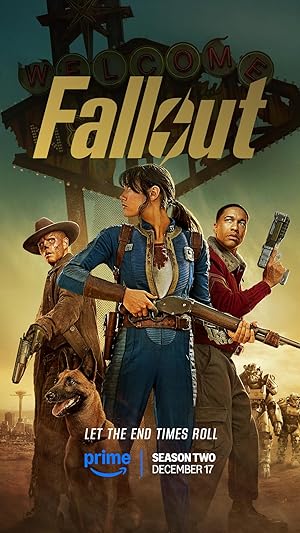
Fallout
Series Overview
In a future, post-apocalyptic Los Angeles brought about by nuclear decimation, citizens must live in underground bunkers to protect themselves from radiation, mutants and bandits.
Get the Weekly Woke Watchlist
New and trending movies scored for woke bias, preachy messaging, and forced political themes — before you waste your evening.
No spam. One useful email per week.
Season-by-Season Breakdown
Season 1
200 years after the apocalypse, the gentle denizens of luxury fallout shelters are forced to return to the incredibly complex, gleefully weird and highly violent universe waiting for them above.
View Full Season AnalysisOverall Series Review
Categorical Breakdown
Casting features extensive, deliberate diversity, including a black male co-lead, a non-white raider leader, and non-white Vault board members. Many prominent white male characters are specifically depicted as weak (the brother), sexually inadequate (the cousin), or evil and toxic (the original 'husband' and the Brotherhood elders). The show uses race and immutable characteristics to define the moral alignment of many groups, suggesting the systemic problems of the world are rooted in 'whiteness' and unchecked male power.
The central mystery reveals that the pre-war American corporate and political elite—the ancestors and founders of the vaults—are directly responsible for launching the nuclear war. This narrative fundamentally frames the institutions, heritage, and foundational culture of the fictionalized United States as evil, self-serving, and corrupt. The society that collapsed is indicted as fundamentally immoral, perfectly aligning with the idea of civilizational self-hatred.
The primary protagonist is a woman who starts naive but quickly develops into a highly effective survivor and action hero. Many of the white male characters in her immediate sphere, such as her brother and cousin, are portrayed as bumbling, cowardly, or sexually undesirable 'incels.' This narrative structure centers female competence while frequently emasculating the men around her, painting them as failures without the protective masculinity of other characters.
A non-binary or transgender character is explicitly included as a member of the hyper-masculine Brotherhood of Steel, despite the character's physical frailty and emotional instability. The character's gender identity and non-traditional presentation are noted by others in the story. The inclusion of this gender ideology element is overt, though it is not a primary plot driver.
The Brotherhood of Steel is given a pseudo-religious, zealous, and cult-like devotion to their cause, portraying a faith-based institution as fanatical, morally rigid, and selfishly destructive. The Ghoul's overarching worldview and the revelation about the Vaults posit that morality is entirely subjective and a consequence of power dynamics, demonstrating a strong embrace of moral relativism over any objective or transcendent moral law.
Get the Weekly Woke Watchlist
New and trending movies scored for woke bias, preachy messaging, and forced political themes — before you waste your evening.
No spam. One useful email per week.