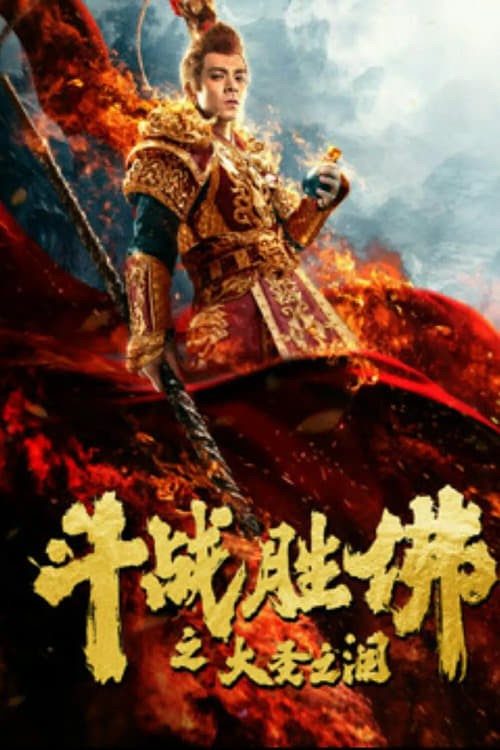
Tears of No Regret
Plot
Sun Wukong, who became the "Fighting Buddha", was bewitched by the spirits and the Longevity Monk met his doom! At the critical moment, Sun Wukong uncovers the source of the spirits and discovers that she is Lucky Star, a goddess of the celestial realm with whom he has been fated for 300 years. ! In order to find out why Lucky Star has turned black and to save the Longevity Monk, the Monkey King sets out on a journey back in time, but ends up losing his... A tear. The great saint's tears, for what and for whom are they shed?
Get the Weekly Woke Watchlist
New and trending movies scored for woke bias, preachy messaging, and forced political themes — before you waste your evening.
No spam. One useful email per week.
Overall Series Review
Categorical Breakdown
The film is a Chinese production based on classic Chinese mythology, exclusively featuring East Asian characters. The concept of vilifying 'whiteness' or forcing Western-style racial diversity is entirely absent, as the narrative is concerned with celestial and mythological conflict, not social hierarchies or intersectional privilege. Character merit is tied to spiritual power and heroic love.
The movie is an adaptation of a core Chinese mythological text (*Journey to the West*), celebrating its own cultural and spiritual heritage. It portrays the celestial realms and Buddhist figures (Fighting Buddha, Longevity Monk) as the foundation of the spiritual world. There is no hostility toward the native civilization, its institutions, or its ancestors, and no attempt to frame the home culture as fundamentally corrupt or racist.
The female lead, Lucky Star, is a powerful goddess who becomes the main antagonist and the driving force of the plot. She possesses immense power and agency, which is a common trope in fantasy but scores low on the 'Girl Boss' scale because her arc is primarily defined by a tragic romance and a fated connection with the male lead, Sun Wukong. The movie focuses on the strength of their bond, rather than depicting motherhood as a prison or men as emasculated or universally incompetent.
The core of the plot revolves entirely around the fated, romantic pairing of the male hero, Sun Wukong, and the female goddess, Lucky Star. The narrative is a heterosexual-coded fantasy romance. No elements of alternative sexual identity, deconstruction of the traditional nuclear family, or gender theory are present in the central conflict or themes.
The film is steeped in Chinese spiritual concepts, including celestial deities, the Fighting Buddha, and a Buddhist monk (Longevity Monk). It fully engages with the spiritual and celestial hierarchy. However, the 'blackening' of a goddess and the betrayal in the celestial realm introduce moral ambiguity and flawed divine figures. This is a common element of mythological drama, but it is not an attack on the concept of faith itself; rather, it's a moral failure within the divine hierarchy. Faith and duty remain strong motivators for the main hero.
Get the Weekly Woke Watchlist
New and trending movies scored for woke bias, preachy messaging, and forced political themes — before you waste your evening.
No spam. One useful email per week.