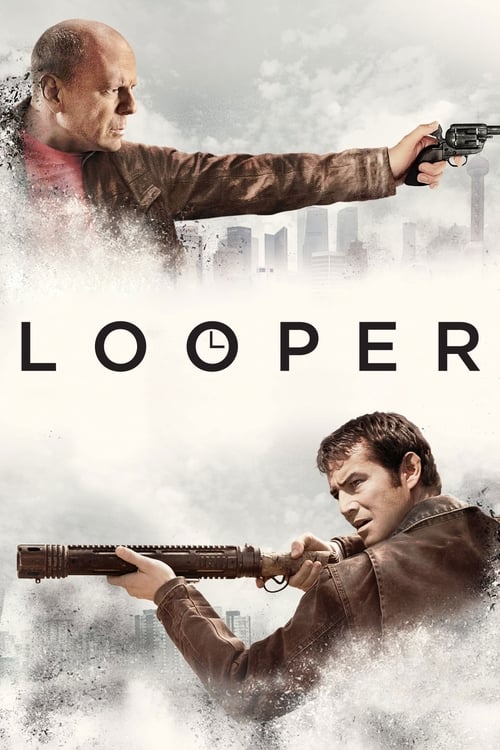
Looper
Plot
In the year 2044, time travel has not yet been invented but in 30 years it will have been. When the mob wants to get rid of someone, they will send their target into the past where a looper, a hired gun, like Joe is waiting to mop up. Joe is getting rich and life is good until the day the mob decides to close the loop, sending back Joe's future self for assassination.
Get the Weekly Woke Watchlist
New and trending movies scored for woke bias, preachy messaging, and forced political themes — before you waste your evening.
No spam. One useful email per week.
Overall Series Review
Categorical Breakdown
The plot's central conflict revolves around the moral choice of the main character, Joe, and the fate of a powerful child, not on race or intersectional hierarchy. The main characters, protagonists and antagonists alike, are judged entirely by their choices and actions as assassins, lovers, and parents. Race is completely incidental to the story's themes and casting is colorblind, with no attempt to vilify 'whiteness' or lecture on systemic privilege.
The film depicts a dystopian 2044 America suffering from economic collapse and social decay, but this setting functions as a cautionary tale of unchecked greed and societal decline, not as an indictment of Western civilization itself. The narrative's climax centers on a profound act of self-sacrifice to save a mother and her child, upholding the value of the traditional family unit as the key to a hopeful future, which is contrary to civilizational self-hatred.
The most significant female character, Sara, is a powerful figure defined by her role as a fiercely protective mother, a theme that celebrates natalism and the maternal bond. She is tough, independent, and highly capable of defending her home and son, yet she is not presented as a perfect 'Girl Boss' but as a woman fighting for her family's survival. The redemption of the male protagonist is tied directly to his decision to protect this mother-child unit, supporting a view of distinct, complementary roles rather than the emasculation of men.
The story does not feature any overt LGBTQ+ characters or themes. Sexual identity is not a part of the character's definition or the conflict. The narrative strongly centers on the traditional male-female pairing (Old Joe and his wife) and the nuclear family unit (Sara and her son) as the object of both desire and ultimate self-sacrifice, presenting a normative structure without political commentary or deconstruction.
The movie explores deep moral questions about whether it is justified to kill a child to prevent future evil, a classic 'kill Hitler' ethical dilemma. The resolution involves a self-sacrifice to break a vicious cycle of violence, suggesting a belief in transcendent moral law and redemption rather than pure moral relativism. While there is no explicit religious dialogue, the final choice privileges a higher good over self-preservation, arguing against a spiritual vacuum. The film contains a high level of dark, amoral violence among its characters, which slightly raises the score as it reflects a lack of traditional moral compass in the world depicted.
Get the Weekly Woke Watchlist
New and trending movies scored for woke bias, preachy messaging, and forced political themes — before you waste your evening.
No spam. One useful email per week.