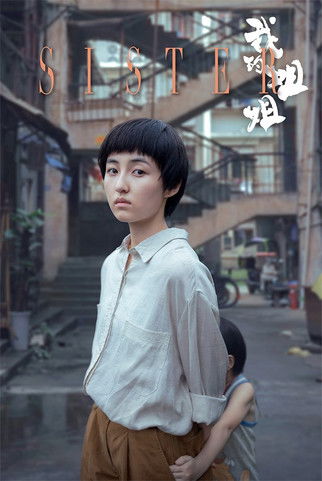
Sister
Plot
A girl who has lost her parents due to a tragic car crash is facing the issue of pursuing an independent life of raising her younger brother that she barely likes…
Get the Weekly Woke Watchlist
New and trending movies scored for woke bias, preachy messaging, and forced political themes — before you waste your evening.
No spam. One useful email per week.
Overall Series Review
Categorical Breakdown
The plot's central conflict is a lecture on systemic oppression and structural inequality based on gender within a specific cultural context. The main character's life is jeopardized not by personal merit but by her immutable characteristic (being a daughter) in a culture that favors sons, which is the definition of identity politics in practice. The narrative exists to highlight this gender-based systemic oppression.
The film engages in a strong critique of its 'home' traditional values, specifically the Chinese patriarchal family structure and the concept of filial piety when applied to son preference. The family's traditional expectations are framed as oppressive, suffocating, and a direct threat to the individual's future and liberty. The story depicts the 'ancestral' cultural structure as fundamentally corrupt and unjust, though the critique is directed at Chinese culture, not Western civilization.
The main character is an ambitious woman focused on her education and career, explicitly viewing the caregiving role for her brother as a threat to her fulfillment. This is a high-score portrayal of the anti-natalism theme, where motherhood and caregiving are seen as a 'prison' preventing her independent, self-actualized 'girl boss' destiny. The men in the story are either ineffectual (the boyfriend) or representatives of the old, broken patriarchal system (the absent father, the well-meaning but flawed uncle).
The narrative is focused entirely on heterosexual family and sibling dynamics, with no elements of alternative sexual ideologies, gender theory, or queer representation. The focus is the deconstruction of the traditional nuclear family's expected roles, but not through the lens of sexual identity or gender ideology. The score is low because the thematic focus is on cultural patriarchy, not queer theory.
The film's conflict is rooted in social and cultural traditions (filial piety, patriarchy) rather than religious doctrine. There is no explicit hostility toward organized religion, specifically Christianity, nor is there a focus on theological or transcendent morality. The conflict is primarily secular and sociological.
Get the Weekly Woke Watchlist
New and trending movies scored for woke bias, preachy messaging, and forced political themes — before you waste your evening.
No spam. One useful email per week.