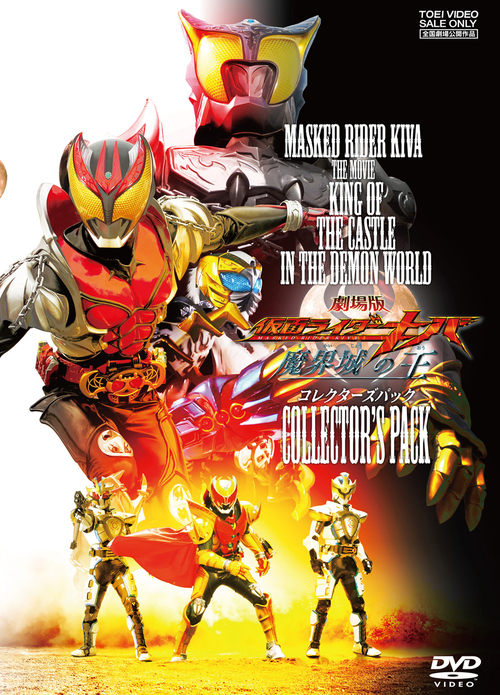
Kamen Rider Kiva: King of the Castle in the Demon World
Plot
When a powerful new foe known as the Legendorga arises in 2008, Wataru investigates the mystery behind the crisis, which brings him in contact with a man Nago once knew, Shiramine Takato, whose 3WA also possess their own Rider System. When Shiramine explains how everything began in 1986, Wataru uses Castle Doran’s Time Door to travel back in time, leading him to meet his father face-to-face at last. But has Wataru managed to change the future, or will the Legendorga still rise and enslave humanity?
Get the Weekly Woke Watchlist
New and trending movies scored for woke bias, preachy messaging, and forced political themes — before you waste your evening.
No spam. One useful email per week.
Overall Series Review
Categorical Breakdown
The conflict revolves around different 'Demon Races' (Fangires, Legendorga, Humans), but this structure is a classic Tokusatsu monster-of-the-week trope and not a critique of a Western 'whiteness' or an intersectional hierarchy. The hero's identity as a half-Fangire is a universal struggle of self-acceptance and destiny, not a political lecture on systemic oppression.
The central goal is the preservation of humanity and the world from the Legendorga. There is no hostility toward Japanese culture, home, or ancestors. The narrative explicitly honors the sacrifices and legacy of the previous generation, especially the protagonist's father, which opposes the definition of civilizational self-hatred.
Female characters like Megumi and Yuri Aso are active and competent monster hunters who utilize the Kamen Rider Ixa system. They participate in the fighting, demonstrating capability. However, the core emotional plot is the affirmation of the paternal bond and legacy between a father and son, and there is no messaging that disparages motherhood, promotes anti-natalism, or portrays men as uniformly incompetent.
The story adheres to a normative structure, with the primary emotional anchor being the traditional father-son family dynamic and the generational legacy. There is no evidence of centering alternative sexualities, deconstructing the nuclear family unit, or promoting gender ideology in the narrative.
The primary antagonist is a supernatural 'Demon Race' Lord whose goal is world enslavement, representing an objective and transcendent evil force. The conflict is a moral struggle against tyranny. There is no presence of moral relativism or specific antagonism toward traditional religion, especially Christianity.
Get the Weekly Woke Watchlist
New and trending movies scored for woke bias, preachy messaging, and forced political themes — before you waste your evening.
No spam. One useful email per week.