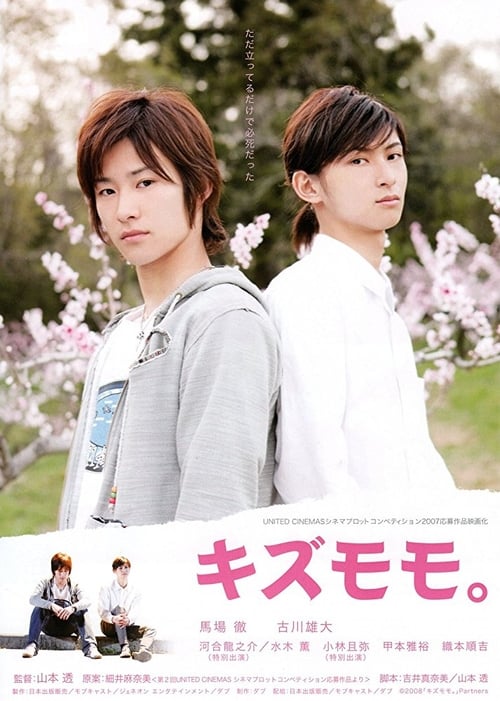
Kizumomo.
Plot
Aki, who loves freedom, mets Masaya, an aspiring watchmaker. The two have opposite personalities and initially clash. The two reach better terms when Masaya is able to see Akis inner pain. Eventually, Masaya uncovers Akis sad past which was supposed to be held secret from everyone.
Get the Weekly Woke Watchlist
New and trending movies scored for woke bias, preachy messaging, and forced political themes — before you waste your evening.
No spam. One useful email per week.
Overall Series Review
Categorical Breakdown
The narrative's focus is on the character's internal pain and their personal relationship, embodying a universal meritocracy of the soul. Characters are judged entirely by the content of their character, their emotional state, and their personal aspirations (watchmaking, freedom). The film is Japanese, featuring an ethnically homogeneous cast, and does not engage with race, intersectional hierarchy, or the vilification of whiteness.
The film is a Japanese production focused on a personal drama, making the concept of hostility toward Western civilization irrelevant. The setting, which includes an aspiring watchmaker, emphasizes craftsmanship, stability, and personal dedication. The story focuses on overcoming personal hardship, which affirms core human values, rather than attacking the home culture or institutions.
The main focus is on the emotional journey and 'bromance' of the two male leads, Aki and Masaya. The central female figure is a kind, helpful middle-aged woman, Yoshiko, who aids the male protagonists. There is no 'Girl Boss' trope, no emasculation of the male characters, and no anti-natalist messaging. The low score reflects the narrative's primary focus being on male emotional development, which simply sidesteps the topic of radical feminism.
The core relationship between the two main male characters, Aki and Masaya, is clearly defined as a deep 'bromance' or friendship that helps one of them heal from past trauma. Commentary surrounding the film explicitly states that it is a drama about life, not a 'Boy Love' or 'yao-i' story. The relationship’s conflict is emotional and personal, not centered on sexual identity, gender ideology, or the deconstruction of the nuclear family.
The movie is a personal human drama rooted in themes of grief, friendship, and self-discovery. The conflict is entirely psychological and emotional, revolving around a sad past and the struggle to move forward. There is no mention of religious belief, moral relativism, or hostility toward faith; the narrative acknowledges an objective personal truth in overcoming trauma and finding a higher purpose in life.
Get the Weekly Woke Watchlist
New and trending movies scored for woke bias, preachy messaging, and forced political themes — before you waste your evening.
No spam. One useful email per week.