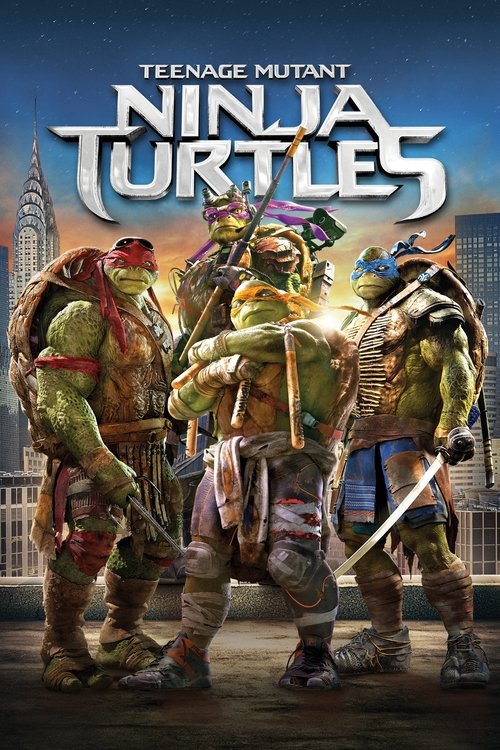
Teenage Mutant Ninja Turtles
Plot
When a kingpin threatens New York City, a group of mutated turtle warriors must emerge from the shadows to protect their home.
Get the Weekly Woke Watchlist
New and trending movies scored for woke bias, preachy messaging, and forced political themes — before you waste your evening.
No spam. One useful email per week.
Overall Series Review
Categorical Breakdown
April O'Neil's boss is changed from a white male to an African-American woman, Bernadette Thompson, representing a forced insertion of diversity in a supporting role. The primary human villain, Eric Sacks, is a greedy white male business executive who orchestrates the city-wide terror plot. However, the turtles themselves embody universal meritocracy; they are judged entirely by their actions as heroes protecting the innocent, transcending any human identity characteristics.
The central conflict revolves around the heroes protecting their home, New York City, from a man-made threat. The institution of the family (Splinter and his four adopted sons) is portrayed as the shield against chaos and the source of strength. There is no element of hostility toward Western civilization, and the narrative respects the idea of defending one's home.
April O'Neil is established as the key human figure in the entire mythos, as she is revealed to be the one who saved the turtles and Splinter from the lab fire, directly making her the reason for their existence and eventual heroism. This rewrite elevates her to a pivotal, near-perfect 'Girl Boss' role, significantly reducing the agency of the titular male heroes by making them products of her childhood action. The male supporting character, Vern Fenwick, is largely a bumbling comedic sidekick.
The movie contains no focus on alternative sexualities, gender ideology, or the deconstruction of the nuclear family. The family unit of the Turtles and their adoptive father, Splinter, is a normative structure based on protective masculinity and brotherhood.
The conflict is a secular battle between masked heroes and corrupt, greedy corporate criminals. The morality is objective, defined by good vs. evil and protecting the innocent, without any hostility toward traditional religion or a critique of Christianity.
Get the Weekly Woke Watchlist
New and trending movies scored for woke bias, preachy messaging, and forced political themes — before you waste your evening.
No spam. One useful email per week.