The Calligrapher
Plot
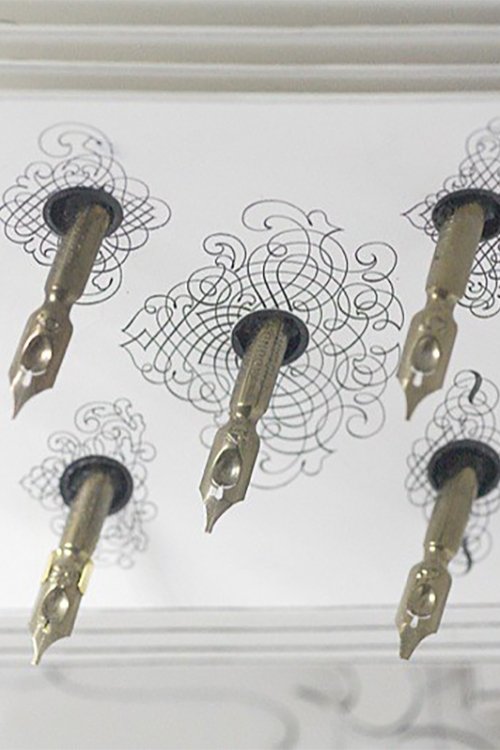
With harpsichord music in the background, a dandy, seated at a table, plucks a quill pen from a ceiling full of them above him, dips it in ink, thinks, then draws a straight line down the page in front of him, out of which sprout six more quill pens, each held by a hand. The calligrapher moves all the hands and pens in unison, drawing an elaborate feathered wing, which comes to live, peeling off the page, and, now a quill pen, slips in to his hand. He tucks it behind his left ear.
Get the Weekly Woke Watchlist
New and trending movies scored for woke bias, preachy messaging, and forced political themes — before you waste your evening.
No spam. One useful email per week.
Overall Series Review
Categorical Breakdown
The film is an abstract, one-minute short with a single male character, precluding any narrative focus on race, intersectional hierarchy, or diversity mandates. The dandy is defined purely by his creative skill as a calligrapher.
The setting features a Western 'dandy' figure, quill pens, and harpsichord music, celebrating a European artistic tradition (calligraphy) and an aesthetic of imaginative creation. There is no element of civilizational self-hatred or demonization of Western ancestors.
The film features only a single male character, the calligrapher, performing an act of creation. The extreme length and abstract nature leave no room to explore gender dynamics, 'Mary Sue' tropes, male emasculation, or anti-family messaging.
The one-minute, non-narrative structure focuses entirely on the surreal act of drawing. There is no content relating to sexual identity, deconstructing the nuclear family, or lecturing on gender theory. Sexuality remains private and unmentioned.
The core of the short is the quasi-magical transcendence of art—a drawn line becomes a living, feathered wing—implying a form of power or higher principle in creation. While not overtly religious, this focus on transcendent creation stands in opposition to crass moral relativism, earning a slightly higher score only due to the abstract, non-explicit nature of the morality.
Get the Weekly Woke Watchlist
New and trending movies scored for woke bias, preachy messaging, and forced political themes — before you waste your evening.
No spam. One useful email per week.